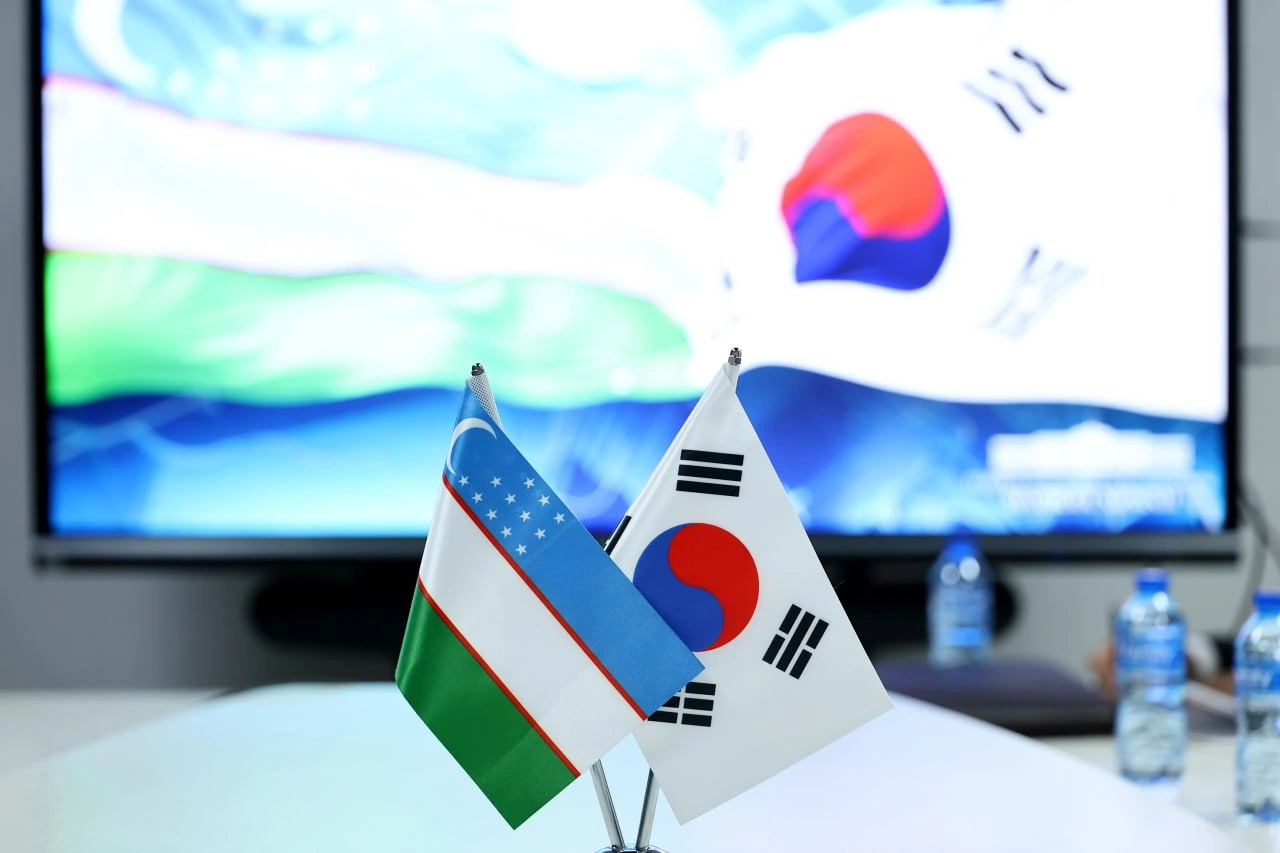
BAKU, Azerbaijan, July 1. The expanding scope
of Uzbekistan–South Korea cooperation reflects a shift toward a
more strategic partnership centered on technological modernization,
industrial development, digital transformation, and long-term
investment.
The expanding scope of bilateral engagement is underpinned by a
solid economic foundation. Bilateral trade turnover between
Uzbekistan and South Korea reached approximately $1.7 billion in
2025, while South Korean investment in Uzbekistan has exceeded $8
billion. Nearly 1,000 joint ventures with Korean participation
operate across various sectors of the Uzbek economy. In addition,
bilateral trade increased by 12% in early 2026, reflecting the
growing dynamism of economic relations and the increasing role of
South Korea as a source of investment, technology, and industrial
expertise for Uzbekistan.
One of the most significant trends is the strengthening of
cooperation in the energy sector. The upcoming second Uzbekistan -
Korea International Energy Forum, “Energy Value Networks Forum,”
reflects both countries’ commitment to expanding collaboration in
renewable energy, energy efficiency, and advanced energy
technologies. The continuation of the forum following its
successful launch in 2025 indicates the institutionalization of
energy dialogue between the two countries. As Uzbekistan seeks to
modernize its energy infrastructure and increase the share of clean
energy in its energy mix, South Korea’s technological expertise and
investment capacity position it as a valuable partner in supporting
these objectives.
Another major pillar of bilateral relations is digital
transformation. Multiple meetings and forums held in June 2026
focused on artificial intelligence, cybersecurity, e-government,
disaster management technologies, and public administration reform.
The establishment of a Digital Government Cooperation Center
represents a particularly important outcome, creating a permanent
mechanism for transferring South Korean experience in digital
governance to Uzbekistan. South Korea is widely recognized as one
of the world’s leaders in e-government development, making its
expertise especially relevant as Uzbekistan continues implementing
large-scale digital reforms.
The emphasis on artificial intelligence and digital
infrastructure highlights a shift toward future-oriented
cooperation. Discussions surrounding data centers, Cyber
University, IT service exports, startup development, and digital
education indicate that both countries are seeking to create
long-term technological ecosystems rather than focusing solely on
individual projects. For Uzbekistan, cooperation with South Korea
provides access to advanced technologies and management expertise,
while South Korean companies gain opportunities to enter a rapidly
growing Central Asian digital market.
Economic and investment cooperation remains one of the key
drivers of bilateral relations and continues to expand into
increasingly sophisticated industries. The visit of Uzbekistan’s
Minister of Investment, Industry, and Trade to South Korea
demonstrates both governments’ intention to diversify bilateral
economic relations and increase industrial collaboration.
Agreements covering sectors ranging from infrastructure and
construction materials to robotics, metallurgy, financial services,
tourism, and energy suggest a broadening investment agenda. The
involvement of institutions such as KOICA and the Export-Import
Bank of Korea further strengthens financial mechanisms capable of
supporting large-scale projects.
Scientific and educational cooperation is emerging as another
important area of engagement. Discussions on agricultural research,
innovation, and joint scientific projects illustrate growing
efforts to build knowledge-based partnerships. Such cooperation
contributes not only to agricultural modernization but also to
human capital development and the transfer of advanced research
practices.
Transport and logistics cooperation further demonstrates the
practical dimension of the partnership. The delivery of Hyundai
Rotem high-speed trains through a multimodal transport corridor
connecting South Korea, China, Kazakhstan, and Uzbekistan
highlights both countries’ commitment to infrastructure
modernization. Beyond improving passenger transportation, these
projects support tourism development, logistics integration, and
broader economic connectivity.
The diversity of ongoing initiatives demonstrates that bilateral
cooperation is no longer concentrated in a limited number of
sectors but increasingly encompasses the full spectrum of economic
modernization, technological development, and institutional
reform.
An additional factor strengthening bilateral ties is the
significant Korean diaspora in Uzbekistan. Discussions regarding
the upcoming 90th anniversary of the Korean diaspora’s settlement
in Uzbekistan underscore the cultural and historical foundations of
the relationship. The diaspora serves as an important bridge
facilitating people-to-people contacts, cultural exchange, and
economic cooperation.
Taken together, these developments indicate that Uzbekistan and
South Korea are constructing a multidimensional partnership based
on complementary interests. Uzbekistan seeks technological
modernization, industrial diversification, digital transformation,
and foreign investment, while South Korea views Uzbekistan as a
strategically important partner in Central Asia with considerable
economic potential and growing regional influence.
The breadth of cooperation reflects the strategic importance of
the relationship for both countries. The combination of strong
economic ties, expanding technological cooperation, and growing
institutional dialogue suggests that Uzbekistan–South Korea
relations are evolving into one of the most comprehensive
partnerships between a Central Asian state and an East Asian
economy.
Looking ahead, cooperation is likely to deepen further in
renewable energy, artificial intelligence, digital government,
transport infrastructure, advanced manufacturing, and
innovation-driven industries. The increasing number of
institutional mechanisms, forums, and joint initiatives suggests
that bilateral relations are becoming more structured and
sustainable, creating a durable framework for long-term cooperation
and positioning South Korea as one of Uzbekistan’s most important
strategic partners in Asia.