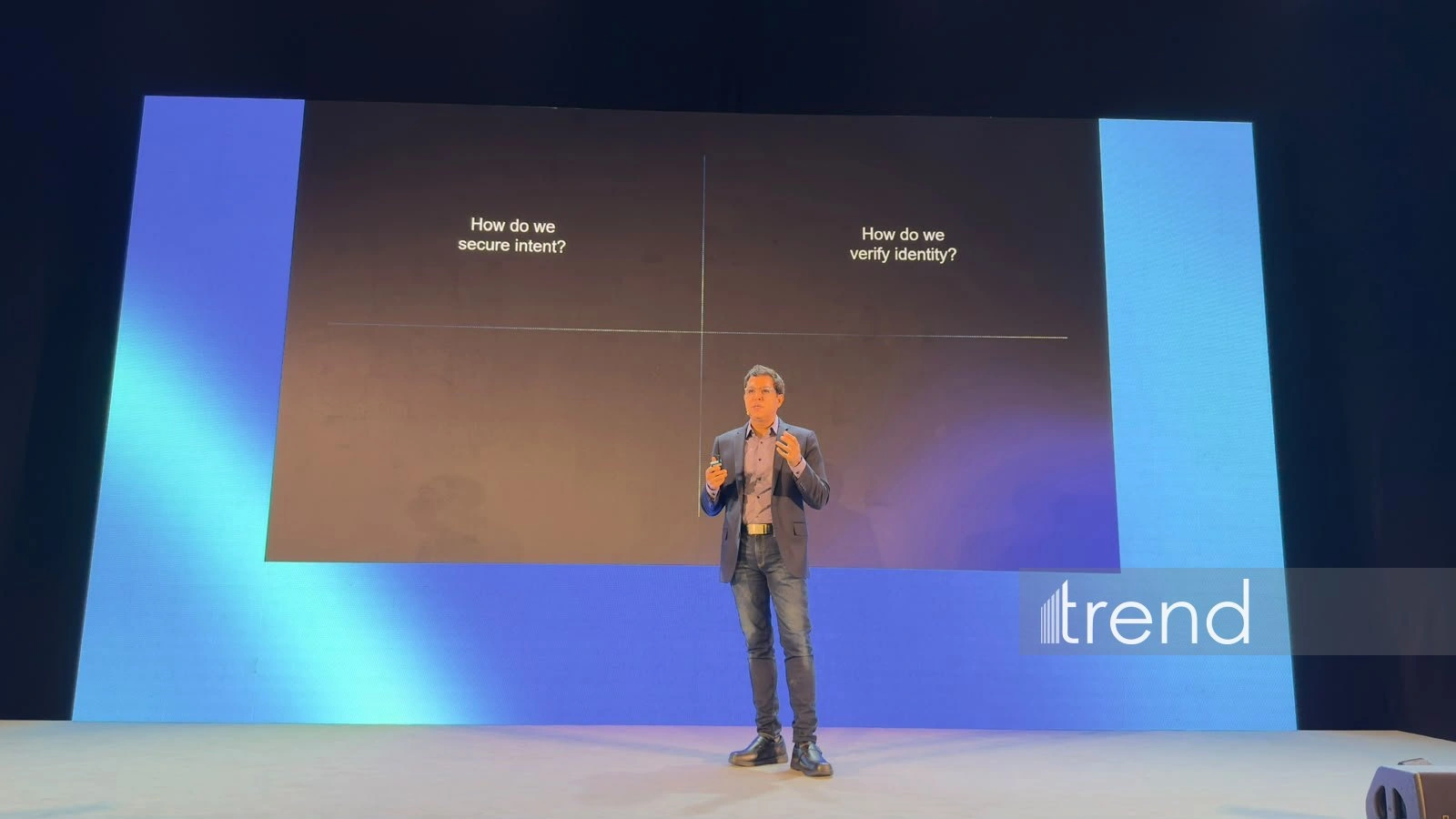
PARIS, France, June 30. Visa is modernizing the
security architecture of its global payment network, adapting it to
the era of artificial intelligence (AI), when increasingly more
financial transactions will be performed by AI agents, President of
Technology for Visa, Rajat Taneja, said at an information session
at the Visa Payments Forum in Paris, Trend's special correspondent reports from the
event.
According to Taneja, in the coming years, AI will be able to
independently search for products, compare prices, negotiate,
complete purchases, and perform many other actions on behalf of
users.
"Commerce is shifting from a model where decisions are made by
humans to a model where they are made by artificial intelligence.
Therefore, the key question is no longer how to secure payments,
but how to ensure that AI is truly acting on the user's behalf, has
the necessary authority, and is performing transactions in their
best interests," he said.
He noted that the nature of cyber threats is changing with the
spread of AI.
"While fraud was once committed by humans, we are now moving to
a world where threats are shaped and evolved by AI. This means
trust can no longer be limited to verification at the moment a
transaction occurs. It must be continuous at all stages of
interaction," Taneja emphasized.
According to him, modern AI systems are capable of independently
detecting vulnerabilities, analyzing information, building complex
action chains, and carrying out attacks without human
intervention.
"If attacks become autonomous, then defenses must also become
autonomous—responding faster, analyzing events more deeply, and
constantly adapting to new threats," he noted.
In this regard, Visa is modernizing not just individual security
tools, but the company's entire technology platform.
"We're moving from static security models to dynamic, contextual
models that analyze who is performing an action, based on what
authority, for what purpose, in what context, and how that behavior
changes over time," Taneja said.
Furthermore, Visa is developing an architecture based on
continuous analysis of telemetry and digital signals, enabling it
to predict potential threats, automatically respond to them, and
continuously improve its security mechanisms.
"We're building end-to-end security across the entire payment
infrastructure so that it's prepared for the new threat models that
the era of artificial intelligence will bring," he added.