AGHJABADI, Azerbaijan, June 16. It's planned to
increase the modern irrigation areas to 300,000 hectares in
Azerbaijan by 2030, Deputy Minister of Agriculture Zaur Aliyev
said, Trend's
Karabakh bureau reports from the event.
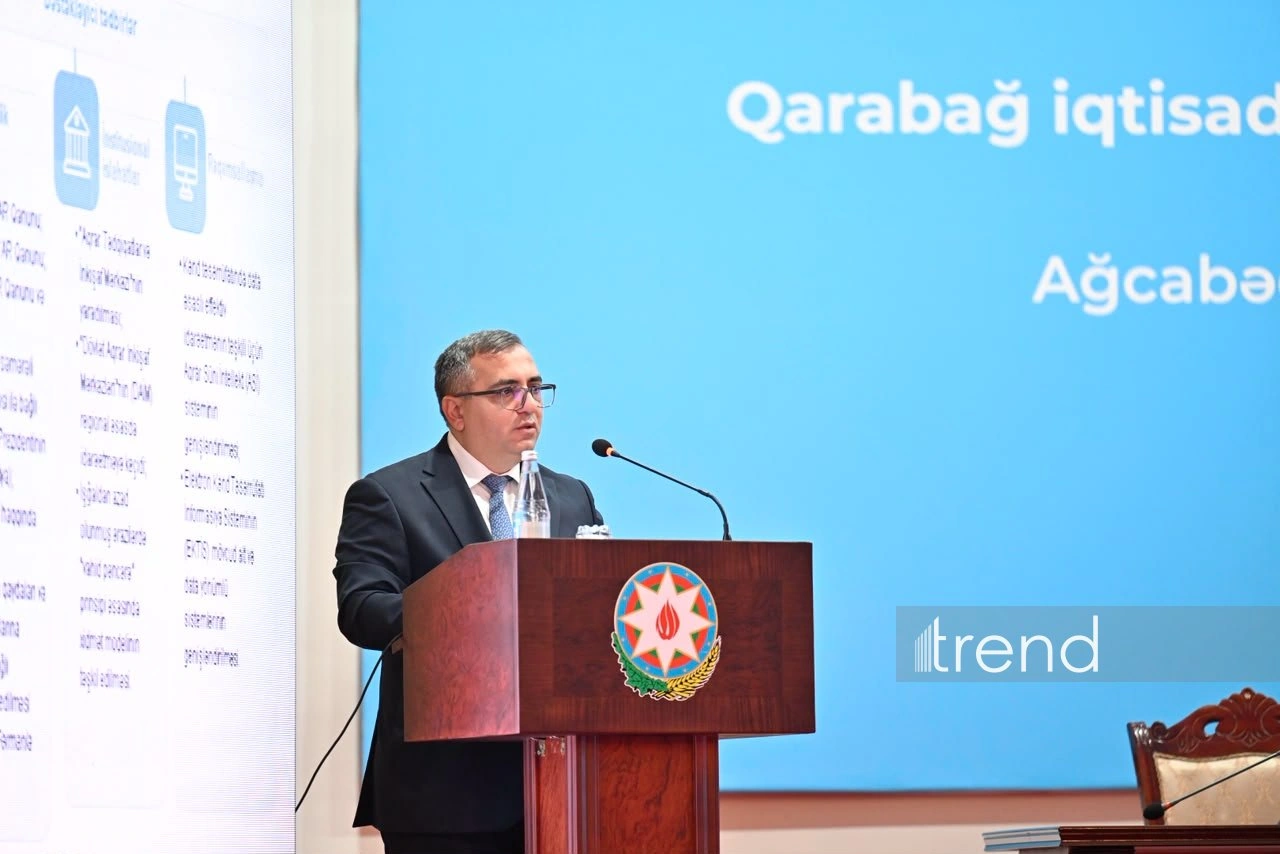
He made the remark at a regional consultation on the Karabakh
economic region being held in the Aghjabadi district, conducted
within the framework of the State Program for the Development of
Agricultural Production and Processing, Fisheries, and Aquaculture
in Azerbaijan for 2026–2030.
According to Aliyev, within the framework of the program,
increasing wheat production, expanding modern irrigation systems,
and developing intensive horticulture and animal husbandry have
been identified as the main priorities.
The deputy minister noted that 22 districts have been selected
as target regions for wheat production, and it's planned to
increase the average yield to 50 centners in these areas. In
addition, it is planned to increase yield through land reclamation
measures in 8 promising regions.
He pointed out that currently, the area of land provided with
modern irrigation systems in the country is 130,000 hectares.
According to the state program, this indicator is planned to be
increased to 300,000 hectares by 2030.
"In order to accelerate the transition of farmers to modern
irrigation systems, preferential sales, credit support, and
additional subsidy mechanisms will be applied.
Within the framework of the program, it's planned to apply laser
leveling technology on 84,900 hectares of land in 22 districts. In
addition, support mechanisms will be developed to create 150,000
tons of additional grain silos and 100,000 tons of additional cold
storage capacity," the official
According to him, important targets have also been set in the
livestock sector. Thus, it is planned to increase milk production
by 10% and beef production by more than 20% by 2030, and to
significantly increase the share of pedigree animals in the
herd.
"The main goal of the State Program is to increase productivity,
added value, and competitiveness in the agricultural sector by more
efficient use of existing land and water resources," he added.