BAKU, Azerbaijan, June 12. Kazakhstan has
presented the main directions of its National Project on the
development of coal-based power generation.
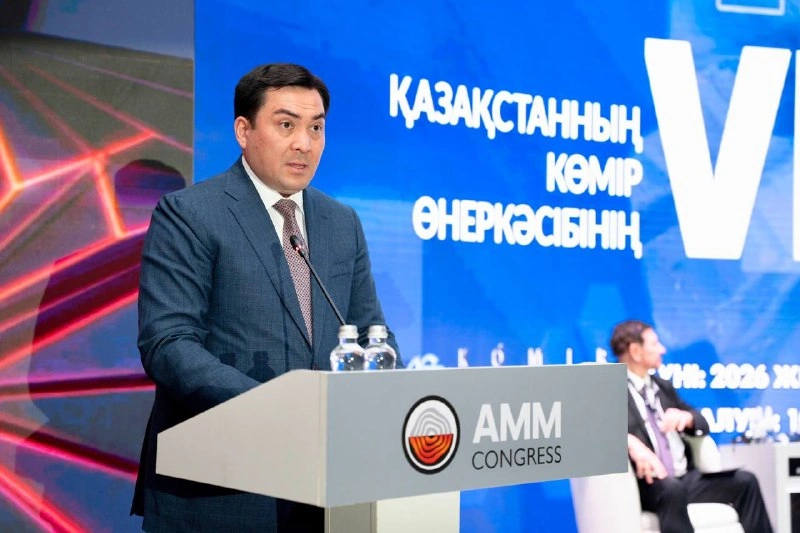
As reported by the country's Ministry of Energy, details of the
project were outlined by Energy Minister Yerlan Akkenzhenov during
the 7th Kazakhstan Coal Industry Forum.
He noted that the national project provides for both the
construction of new coal-fired thermal power plants and the deep
modernization of existing capacities. A key element of the reform
is the introduction of modern environmental solutions, with the
coal sector transitioning to the use of best available technologies
(BAT).
“The coal industry objectively ensures the country’s basic and
stable generation capacity. The state is upgrading this sector to
fundamentally new technical standards. The introduction of advanced
environmental fuel-cleaning technologies, combined with strict
logistics coordination, will make the operation of the domestic
coal-based energy system reliable and predictable,” the minister
said.
Moreover, it was emphasized that stable growth in power
generation is directly linked to fuel supply availability. The
development of generating capacities must proceed in sync with
investments in coal mining companies, transport infrastructure, and
logistics operators.
Akkenzhenov noted that the core of the upcoming plan will
include concrete business processes: long-term coal demand
forecasting, improved resilience of railway transshipment, strict
industrial safety control, development of domestic human capital,
and promotion of deep processing projects (coal chemistry). A
separate technological focus is placed on digitalization of the
sector, ranging from IT-based real-time monitoring of coal
production and wagon shipments to smart forecasting of transport
bottlenecks along power supply routes.
In March 2026, the government of Kazakhstan approved the
National Project on the Development of Coal-Based Power
Generation.
The document defines Kazakhstan’s energy security strategy
through 2030 and aims to eliminate a shortage of base-load
capacity, the demand for which is increasing significantly amid
industrialization and the growth of the digital economy.
The national project provides for the commissioning and
modernization of 7.8 GW of generating capacity.
It includes the construction of eight new power facilities,
among them major projects in Ekibastuz (2,640 MW), Kurchatov (700
MW), and Zhezkazgan (500 MW), as well as the development of modern
combined heat and power plants (CHPs) in Kokshetau, Semey, and
Ust-Kamenogorsk. In parallel, a deep modernization of 11 existing
power plants will be carried out, including the Aksu State District
Power Plant (GRES), Ekibastuz GRES-2, and the Karaganda energy hub.
This will allow the level of physical wear of key equipment in the
sector to be reduced by 12.6% by 2030.