BAKU, Azerbaijan, June 12. Central Asian
countries signed a Joint Expression of Interest to strengthen
coordinated regional efforts on sustainable mountain ecosystem
management during a high-level event held as part of the 8th
Assembly of the Global Environment Facility (GEF) in Samarkand,
Uzbekistan.
This was reflected in a statement by the National Committee on
Ecology and Climate Change of Uzbekistan.
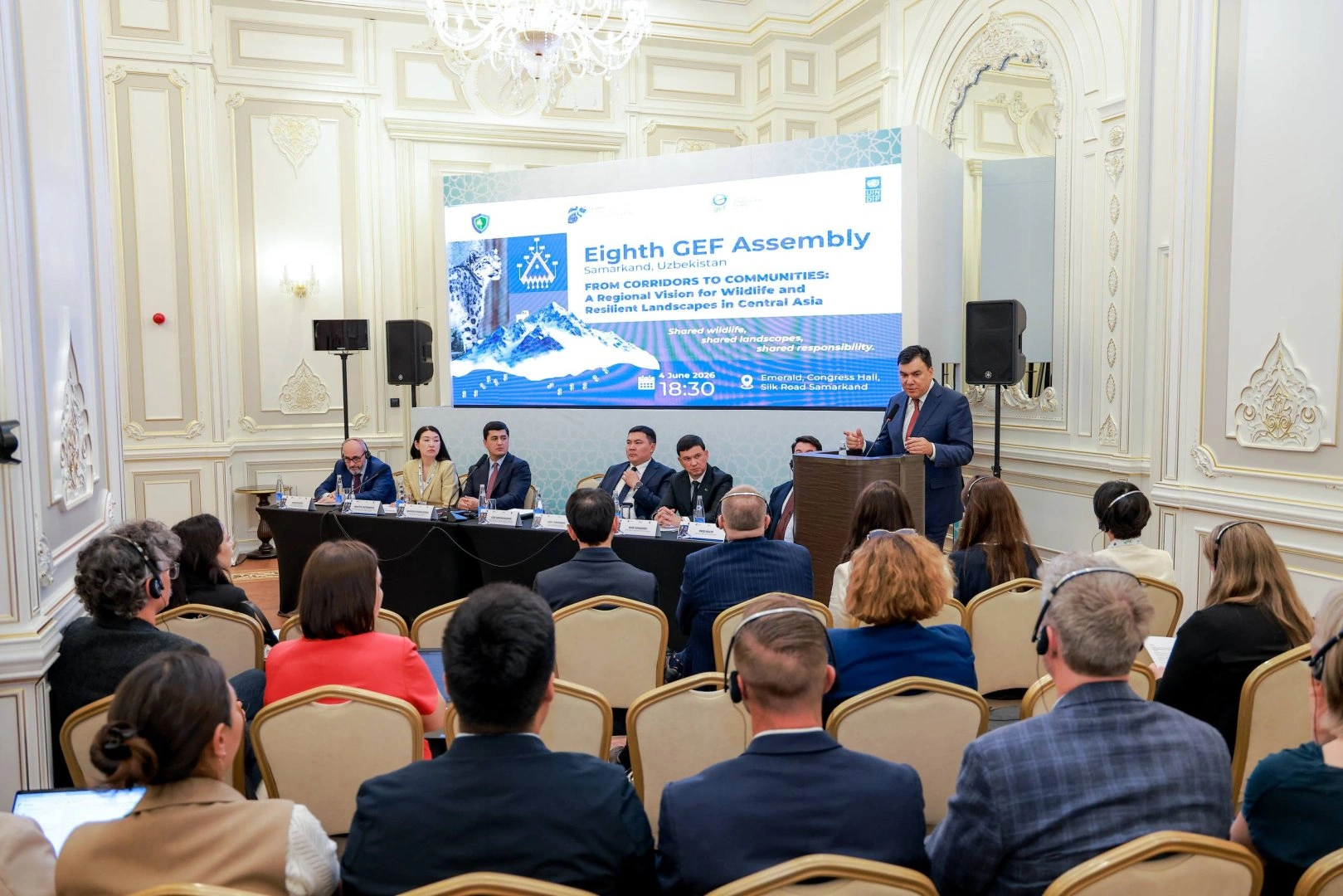
''The event, titled “From Ecological Corridors to Communities: A
Regional Vision for Wildlife Conservation and Sustainable
Landscapes in Central Asia,” brought together government officials
from across the region, representatives of the United Nations
Development Programme (UNDP), the Global Environment Facility,
international organizations, and environmental institutions,''
Uzbek Committee on Ecology says.
Participants included Aziz Abdukhakimov, Adviser to the
President of Uzbekistan on Environmental Issues and Chairman of the
National Committee on Ecology and Climate Change; Kyrgyzstan’s
Minister of Natural Resources, Ecology and Technical Supervision
Akyl Toktobaev; Chairman of Tajikistan’s Committee for
Environmental Protection Bahodur Sheralizoda; Turkmenistan’s Deputy
Minister of Environmental Protection Nuri Dzhumashev; Kazakhstan’s
Head of the Climate Change Adaptation Unit Shattyk Tastemirova; and
Marcos Neto, Assistant Secretary-General of the United Nations and
Director of UNDP’s Bureau for Policy and Programme Support.
''The meeting served as a platform for discussing joint
approaches to preserving Central Asia’s unique natural heritage and
strengthening regional cooperation in biodiversity conservation and
sustainable natural resource management,'' the information
says.
In the course of the meeting, participants noted that Central
Asia is home to valuable transboundary ecosystems and globally
significant wildlife species, including the snow leopard, argali
sheep, and saiga antelope. The region’s mountain ecosystems play a
critical role in maintaining ecological stability, safeguarding
water resources, and supporting local livelihoods. However, climate
change, land degradation, habitat fragmentation, and increasing
human-wildlife conflicts continue to pose significant
challenges.
During the discussions, the participants reviewed key
biodiversity conservation challenges, presented national
initiatives, and exchanged views on opportunities to deepen
regional cooperation. A major outcome of the event was the signing
of the Joint Expression of Interest aimed at advancing coordinated
regional action for the sustainable management of mountain
ecosystems.
Moreover, participants highlighted opportunities under the
upcoming GEF-9 funding cycle, which is expected to expand
investment in wildlife conservation projects, strengthen ecological
connectivity across natural landscapes, support sustainable
income-generating activities for local communities, and improve
regional monitoring and knowledge-sharing systems.
The event underscored the importance of preserving transboundary
ecological corridors, strengthening environmental institutions, and
promoting partnerships that balance conservation objectives with
socioeconomic development.
Following the meeting, participating countries reaffirmed their
commitment to expanding regional cooperation, mobilizing resources,
and implementing joint initiatives to protect biodiversity, advance
global environmental goals, and support sustainable development
across Central Asia.