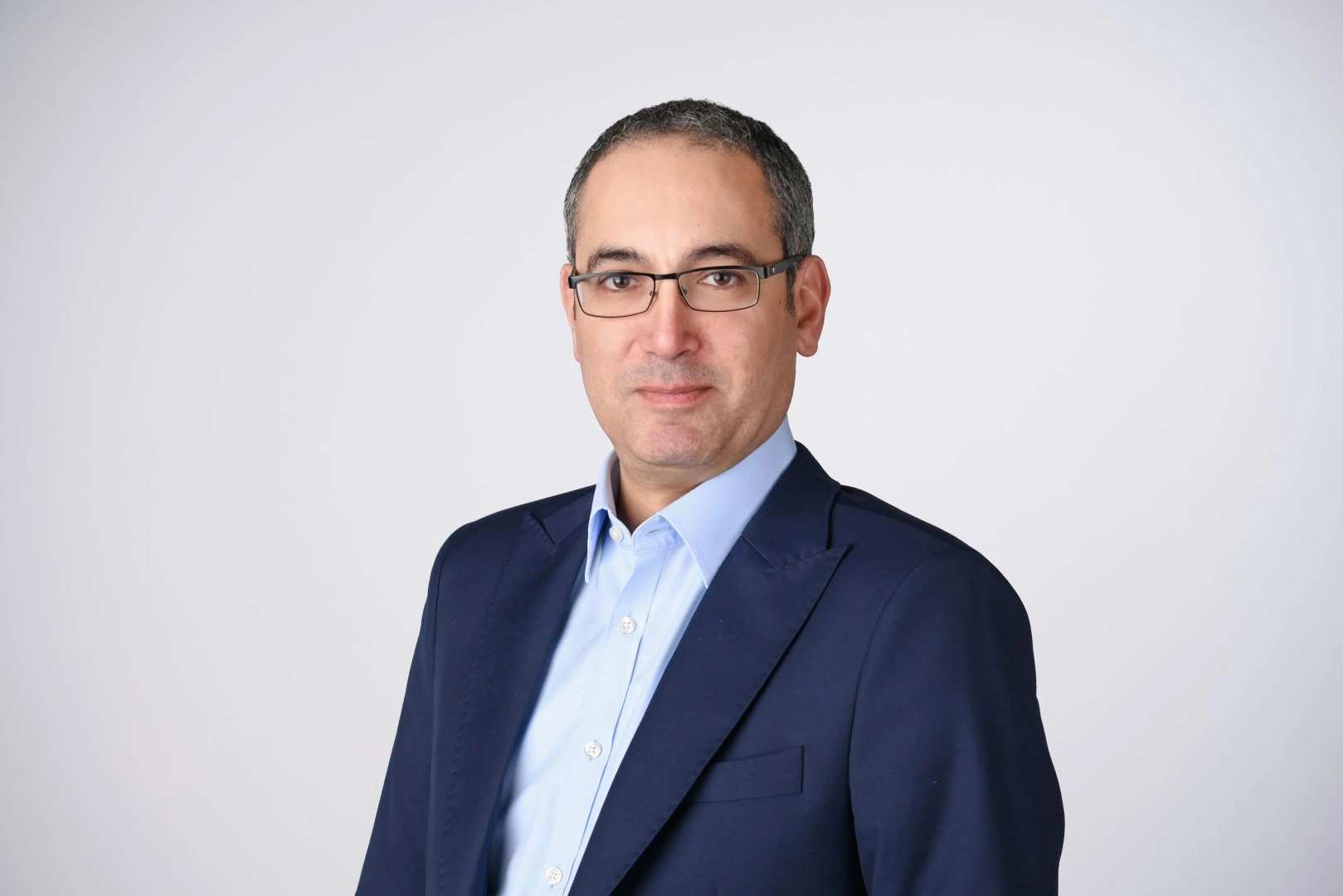
BAKU, Azerbaijan, June 11. Azerbaijan’s economy
has the resources, geography, and institutional capacity to double
GDP over the next decade, Jamal Ismayilov, Azerbaijan and Central
Eurasia Lead at Oliver Wyman, a global leader in management
consulting and a business of Marsh (NYSE: MRSH), said in an
exclusive interview with Trend.
"What stands out to me, having followed Azerbaijan’s development
over many years, is how much the conversation has shifted: it has
moved from talking about diversification to actively building
alternatives to hydrocarbons, particularly in logistics and
selected manufacturing. In 2025, we already saw faster growth of
non-oil and gas sectors. In 2026, Azerbaijan’s GDP is expected to
expand between 2.5%-3.0%, while the non-oil and gas sector is
expected to grow above 4%. That’s genuine progress, but it is not
enough. Oil and gas still generate over 40% of GDP value added,
while services account for under half of GDP, significantly below
global and peer benchmarks. So, the opportunity is substantial and
Azerbaijan’s economy has the resources, geography, and
institutional capacity to grow much faster, and even to double GDP
over the next decade. Such acceleration does require a decisive
shift toward scalable, high‑margin, export‑oriented activities,
particularly services and downstream energy," he said.
Ismayilov pointed out that the time for incremental
diversification has passed, the next phase requires decisive
prioritisation and faster execution.
Talking about the sectors, which offer the strongest medium- and
long-term growth potential in Azerbaijan, the representative of
Oliver Wyman said there’s clear evidence that a core set of sectors
have the potential for scale, profitability, and competitive
advantage in Azerbaijan.
"In Oliver Wyman’s work across similar economies, this kind of
focus tends to be what separates momentum from dilution. Based on
our research, four stand out:
- Downstream and advanced petrochemicals, not
basic refining, but high‑value "downstream‑of‑downstream" products
where margins and global demand are strongest. - Energy‑adjacent services and trading,
capturing value from finance, risk management and commercialisation
of flows, not just physical exports. - Logistics orchestration along the Middle
Corridor, moving from transit geography to trade
intelligence and coordination. - Experience‑based tourism and entertainment,
centred on Baku as a regional hub.
While agriculture and traditional manufacturing are important
socially, even optimistic scenarios show they cannot move the GDP
needle at scale. International investors should focus where
Azerbaijan can realistically compete regionally and globally, not
just domestically," he explained.
Ismayilov went on to add that Azerbaijan should focus on
harmonised corridor governance to enhance its role as a regional
hub.
"Geographically, Azerbaijan is exceptionally well positioned,
sitting at the intersection of Europe, Central Asia, and the Middle
East, with modern ports, rail, and energy corridors already in
place. That puts the country in a strong starting position.
However, true hubs control flows, pricing, data and risk, not just
movement. That’s where, at Oliver Wyman, we really see the next
layer of value creation sitting. Today, Azerbaijan largely earns
transit fees; the next step is to focus on the higher‑value
coordination, contracting, and intelligence layers. To enhance its
role, Azerbaijan should focus on harmonised corridor governance,
digital trade documentation, logistics finance and insurance
capabilities, and institutions that can arbitrate complexity across
borders. In short, the shift must be from corridor to orchestrator.
Places such as Singapore or Rotterdam show that this is where most
value is created, and achieving this is possible with the assets
Azerbaijan already has," said the representative of Oliver
Wyman.
Opportunities in financial sector
development?
He believes that financial sector development is one of the
biggest untapped multipliers in Azerbaijan’s growth story.
"In my experience, this is often the factor that determines
whether other sectors truly scale. Banking modernisation is
progressing, but capital markets remain shallow, and service
exports in finance minimal. In upper‑middle productivity economies,
financial and ICT services generate billions annually, while in
Azerbaijan they are still marginal.
The opportunity is not to replicate London or Frankfurt, but to
build specialised financial capabilities:
- commodity and trade finance linked to energy and logistics
- regional risk management and insurance
- sustainable and transition finance aligned with energy
transformation - and structured financing for infrastructure and PPPs
This requires regulatory credibility, predictable frameworks and
openness to international financial talent. Without a stronger
financial services backbone, other growth sectors won’t be able to
scale," said Ismayilov.
Role of digital transformation and
innovation
He went on to add that digital transformation is a core economic
enabler.
"Across logistics, energy trading, finance and tourism alike,
value increasingly comes from data, algorithms and platforms, not
simply physical assets. Our analysis shows that without digital
control towers, AI‑enabled routing, or automated settlement and
compliance, Azerbaijan risks remaining a low‑margin participant
even as volumes grow. Equally important, digitalisation improves
governance, transparency and investor confidence, which are all
critical for attracting high‑value FDI. Countries that embed
digital standards early lock in competitiveness; those that lag
struggle to catch up," said Ismayilov.
The Oliver Wyman representative believes that several global
shifts work strongly in Azerbaijan’s favour:
- Supply‑chain diversification is increasing demand for the
Middle Corridor. - Energy market fragmentation raises the value of regional
trading hubs and intermediaries. - Growth of services trade, particularly knowledge‑based exports,
benefits smaller, agile economies. - Experience‑driven tourism is expanding faster than traditional
tourism models.
"However, these trends are not permanent tailwinds, and many
countries are competing for the same opportunities. Timing matters,
and Azerbaijan will benefit if it moves faster and more decisively
than peers," he added.
Azerbaijan 3.0
Ismayilov pointed out that previous growth cycles were driven by
resource extraction and then infrastructure build‑out.
"Azerbaijan 3.0 is fundamentally different. It is about where
value is captured, not just what is produced. The model shifts the
country from:
- selling molecules to monetising flows,
- hosting corridors to owning coordination,
- extracting resources to exporting services and
experiences.
It is also more disciplined. Rather than pursuing broad
diversification, it focuses national resources on a small number of
engines capable of compounding at scale. That’s the difference
between steady growth and a structural leap," he noted.
Talking about the most important structural reforms, Ismayilov
said that three stand out:
- A decisive pivot to a service‑led growth model, embedded in
regulation, education, and investment policy. - Opening the economy to foreign human and financial capital,
recognising that domestic pools alone are insufficient for the next
phase. - Institutional reform focused on execution, clear mandates,
measurable KPIs, and accountability in priority sectors.
"These are not easy reforms, and they involve trade‑offs. But
without them, Azerbaijan risks being stuck in low‑single‑digit
growth despite its substantial assets and advantages," he
added.
Role of human capital and skills
transformation
He noted that human capital is one of the key binding
constraints.
"In my view, progress here will ultimately determine the pace of
everything else. Service‑led growth depends on skills in finance,
logistics, analytics, digital platforms, legal structuring, and
international deal‑making. These capabilities do not emerge
organically in small labour markets. This is why nationally
coordinated skills programmes, often in partnership with global
institutions, are essential. Oliver Wyman’s experience globally
shows that targeted capability‑building, linked directly to
priority sectors, can materially accelerate reform outcomes. Put
simply, without rapid skills transformation and openness to global
talent, even the best economic strategy will remain theoretical,"
he said.