BAKU, Azerbaijan, June 11. Uzbekistan and Japan
have agreed to deepen cooperation across a range of economic and
social sectors, including energy efficiency, agriculture,
healthcare, and workforce development, following high-level talks
in Tashkent.
This was reflected in a statement by the Uzbek Ministry of
Economy and Finance.
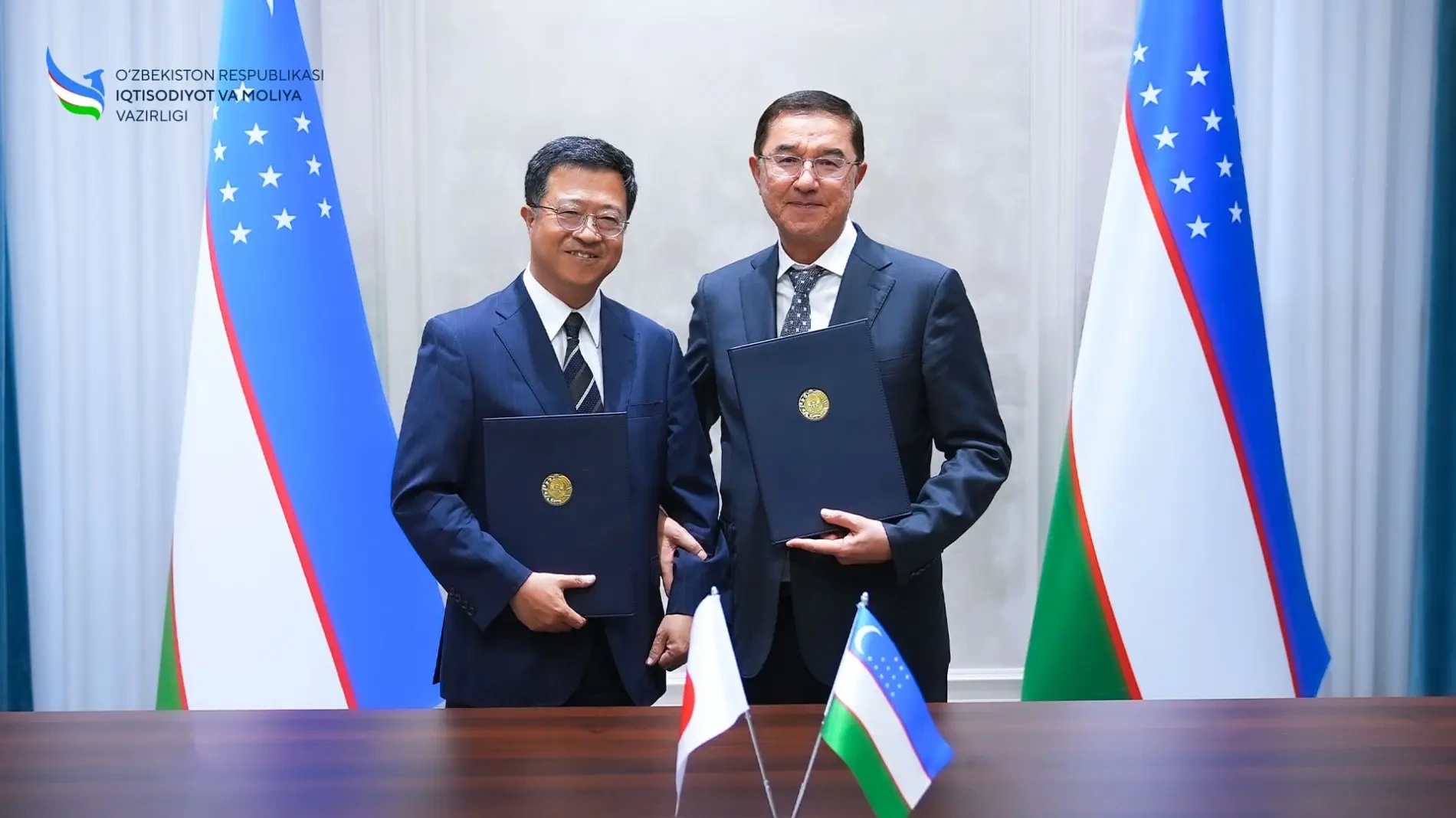
The meeting brought together a Japanese delegation led by
Ambassador Extraordinary and Plenipotentiary of Japan to
Uzbekistan, Kenji Hirata, and Uzbekistan's Deputy Prime Minister
and Minister of Economy and Finance, Jamshid Kuchkarov. The
discussions were also attended by Sakai Mamoru, head of the Japan
International Cooperation Agency (JICA) Office in Uzbekistan,
Deputy Economy and Finance Minister Otabek Fazilkarimov, Deputy
Health Minister Ilkhomjon Umrzakov, and other officials.
During the talks, the two sides reviewed the progress of ongoing
bilateral projects and explored opportunities for expanding
cooperation in areas aimed at strengthening economic growth, social
development, and human capital.
Key topics included enhancing collaboration on energy efficiency
and resource conservation through the adoption of innovative
technologies, developing joint agricultural projects with a focus
on livestock farming, and expanding the "One Village – One Product"
initiative to promote local manufacturing and create employment
opportunities in rural communities.
The parties also discussed closer cooperation in healthcare,
including measures to improve the quality of medical services and
implement modern healthcare projects, as well as initiatives
focused on education, workforce training, and the development of
skilled professionals.
A major outcome of the meeting was the exchange of notes for two
new projects supported by JICA.
The first project, "Enhancing Energy Efficiency in Social
Buildings," will introduce energy-saving equipment and modern
technologies in schools and healthcare facilities. The initiative
is designed to reduce energy consumption, improve resource
management, and boost the overall efficiency of social
infrastructure.
The second project, "Increasing Energy Efficiency in Industry,"
will support businesses and industrial enterprises seeking to
invest in energy-efficient technologies. The program includes the
provision of long-term, low-interest financing to help companies
implement energy-saving measures and modernize operations.
The agreements reflect the growing strategic partnership between
Japan and Uzbekistan, with both countries emphasizing sustainable
development, technological modernization, and human capital
development as key priorities for future cooperation.
Following the meeting, the sides reaffirmed their commitment to
expanding bilateral engagement, maintaining regular dialogue, and
systematically advancing joint initiatives to achieve shared
development goals.
The Japan International Cooperation Agency (JICA) is Japan’s
primary government agency responsible for administering official
development assistance (ODA) to developing countries. Established
in 1974, JICA supports economic and social development through
concessional loans, grants, technical cooperation,
capacity-building programs, and knowledge sharing.