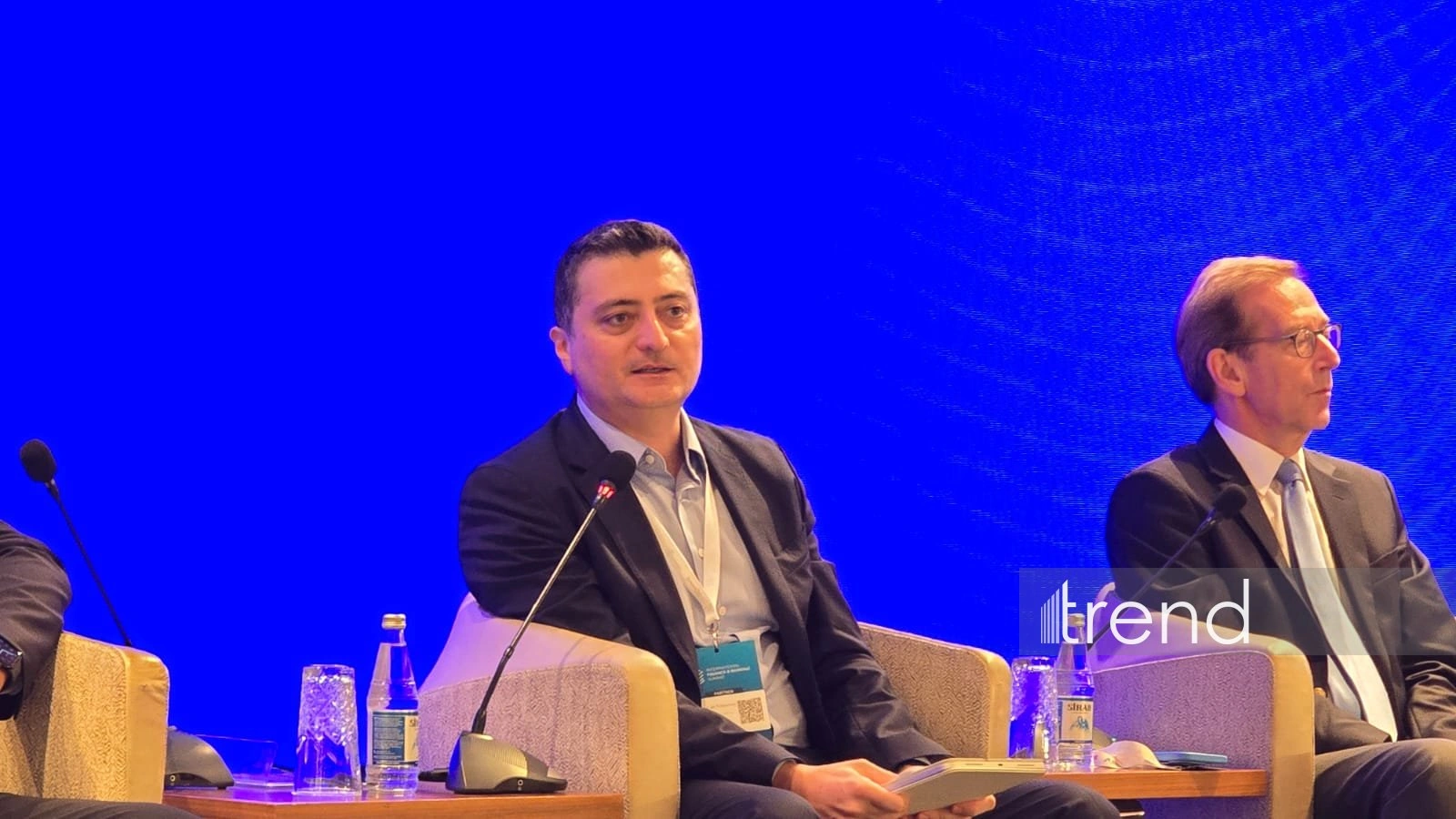
BAKU, Azerbaijan, June 9. A new economic model
that would reduce interbank payment costs is being evaluated, Head
of SWIFT for Türkiye, Caucasus and Central Asia, Hikmet Can
Yılmazsoy, said at the 10th International Finance and Banking
Summit taking place in Baku, Trend reports.
According to him, SWIFT, the international interbank payment
system, is upgrading its infrastructure in line with the digital
transformation in global financial markets.
Yılmazsoy noted that one of the main goals of the modern
financial system is to ensure a secure, 24/7 flow of digital assets
between different countries, different systems, and different
regulatory rules.
"The new structure will create conditions for settlements
between different institutions, different currencies, and different
asset types, as well as effective liquidity management," he
explained.
Building the future on existing
infrastructure
According to the SWIFT official, it is necessary to take into
account the requirements of the future when developing today's
payment flows and infrastructure.
"We are building the payment flows of the future in a way that
they can work together with the existing structure. Currently, this
system is used by more than 11,500 institutions around the world.
We are trying to build new mechanisms precisely on this huge
infrastructure, global standards, and years of experience
(expertise)," he pointed out.
G20 goals and accelerating international
payments
In his speech, he emphasized the importance of international
payments being executed instantly, seamlessly, and quickly, just
like domestic payments.
"The goals set for the financial services sector at the 2020 G20
summit are the main roadmap. These goals are based on four
fundamental principles: speed, transparency, accessibility, and
reducing financial costs," the SWIFT representative clarified.
New economic model in SWIFT's pricing
policy
Yılmazsoy pointed out that SWIFT has been implementing new
approaches to reducing interbank payment costs. He noted that until
now, the organization preferred to stay away from this process,
viewing price regulation issues as a purely internal matter for
banks.
"However, within the framework of the new strategy, new economic
models aimed at reducing interbank payment costs without exceeding
existing limits are being evaluated. Work on these new payment
schemes, which aren't mandatory for partner banks and are
recommendations and guidelines, is currently ongoing," he
concluded.