BAKU, Azerbaijan, June 9. Turkmenistan has
identified the Turkmenistan-Afghanistan-Pakistan-India (TAPI) gas
pipeline as one of the key instruments for promoting long-term
stability and economic recovery in Afghanistan, Turkmenistan's
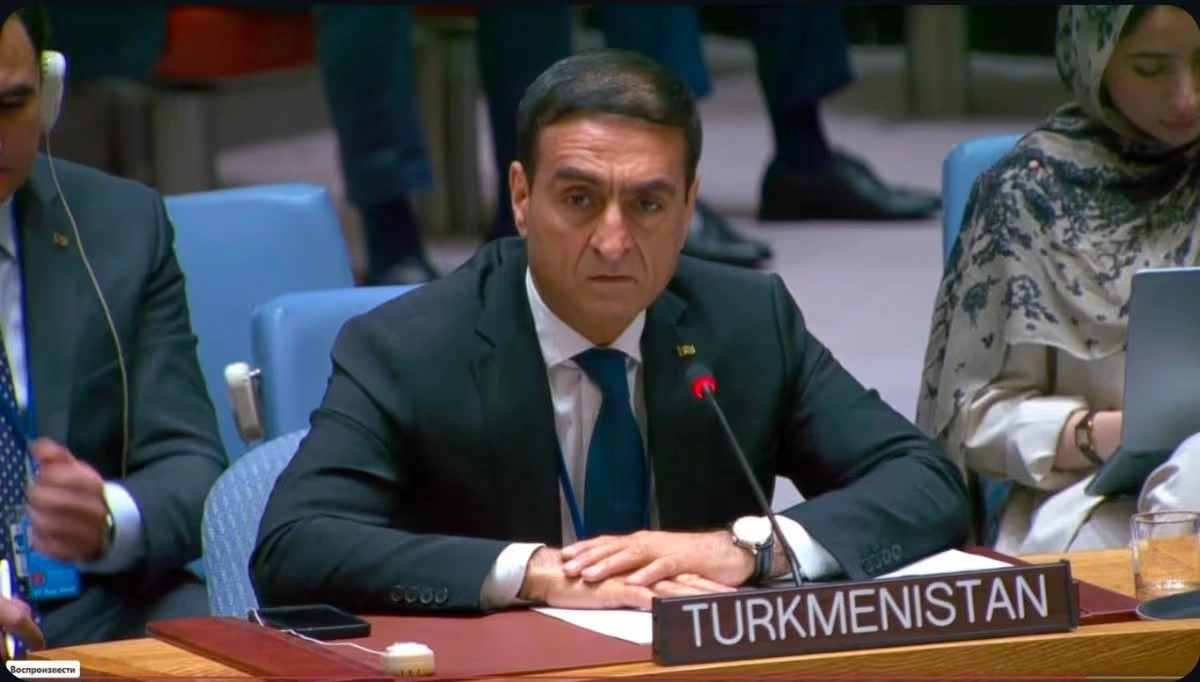
permanent representative to the United Nations said during the
organization’s Security Council briefing, Trend reports via the press service of the
Turkmen government.
Presenting Ashgabat’s position on the situation in Afghanistan,
Hajiyev stressed that, as a neighboring country, Turkmenistan is
interested in the earliest possible restoration of peace, stability
and security in Afghanistan.
According to him, large-scale economic and infrastructure
cooperation should serve as a foundation for sustainable peace in
the country. In this regard, Turkmenistan highlighted the
implementation of major regional projects, including the TAPI gas
pipeline, the Turkmenistan-Afghanistan-Pakistan (TAP) power
transmission line, as well as the development of new railway links
and transport corridors.
The Turkmen side also emphasized the importance of maintaining
broad international dialogue on Afghanistan, particularly within
the framework of the Doha Process, United Nations-led diplomatic
framework launched in 2023 to establish structured, multilateral
engagement with Afghanistan's Taliban authorities.
Turkmen diplomat called on the international community to pursue
balanced, pragmatic and forward-looking approaches toward
Afghanistan, noting that the ultimate goal should be stability,
sustainable development and prosperity for both the Afghan people
and the wider region.
Meanwhile, the Turkmenistan-Afghanistan-Pakistan-India (TAPI)
pipeline is a planned 1,800-kilometer natural gas pipeline designed
to transport up to 33 billion cubic meters of gas annually from
Turkmenistan’s giant Galkynysh field to Afghanistan, Pakistan and
India. Ashgabat views the project as one of the main routes for
diversifying gas exports and strengthening regional economic
integration.
The gas resource base for TAPI is the Galkynysh field, one of
the world's largest gas deposits with estimated reserves exceeding
27 trillion cubic meters. In April 2026, Turkmengaz and China's
CNPC launched the fourth phase of the field's development. The
project involves the construction of new production facilities and
the drilling of wells, which will enable the additional production
of up to 10 billion cubic meters of commercial gas per year.
In early June, the Belfer Center for Science and International
Affairs at Harvard’s Kennedy School noted in its analysis that the
TAPI gas pipeline is being re-anchored in regional energy
discussions as a structured mechanism for regional energy flows,
connecting Turkmenistan’s gas resources with demand centers in
South Asia.