BAKU, Azerbaijan, June 6. Environmental
authorities from five Central Asian countries have signed a letter
of intent to jointly implement the $26 million Central Asia Water
and Land Nexus (CAWLN) program aimed at restoring degraded
ecosystems, strengthening water security and promoting sustainable
management of natural resources across the region, Trend reports via the
National Committee on Ecology and Climate Change.
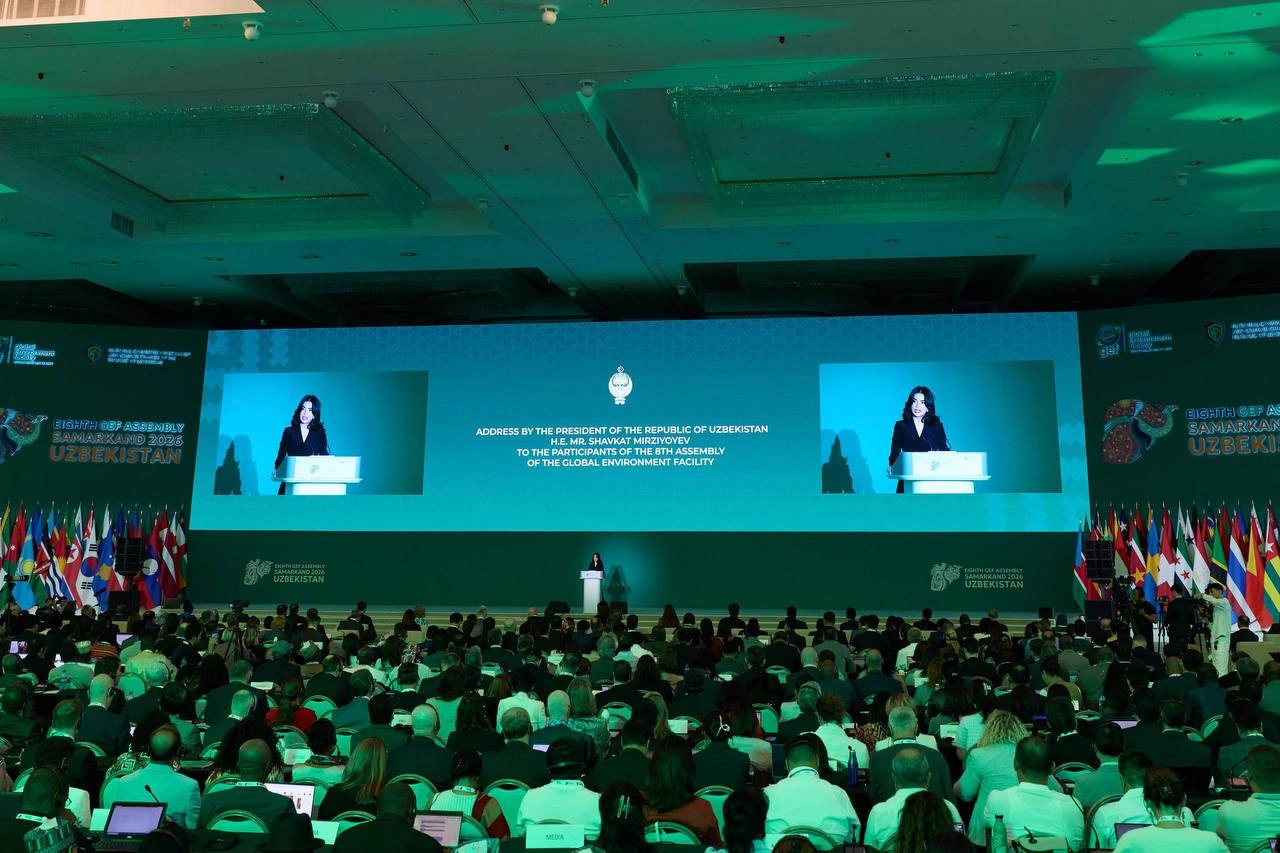
The agreement was signed during a high-level roundtable on land
and water partnerships held on the sidelines of the Eighth Assembly
of the Global Environment Facility (GEF) in Samarkand.
The document was endorsed by environmental officials from
Kazakhstan, Kyrgyzstan, Tajikistan, Turkmenistan and Uzbekistan,
underscoring the countries' shared commitment to integrated water
and land resource management, climate-resilient agriculture,
ecosystem restoration and institutional capacity building.
The roundtable brought together Aziz Abdukhakimov, adviser to
the President of Uzbekistan on environmental issues and chairman of
the National Committee on Ecology and Climate Change, along with
senior environmental officials from across Central Asia,
representatives of international organizations, researchers and
environmental experts.
Discussions focused on nature-based solutions, sustainable
agriculture, ecosystem restoration and measures to enhance regional
water security.
Addressing participants, Abdukhakimov said Uzbekistan views
nature-based solutions as a cornerstone of long-term water
security, climate resilience and sustainable development. He noted
that nearly 80% of Uzbekistan's water resources originate outside
the country, making regional cooperation essential for addressing
land degradation, desertification and changing river flows that
affect food security and livelihoods.
Particular attention was given to the restoration of riparian
forests and wetlands along the Amu Darya River, afforestation
efforts on the dried seabed of the Aral Sea, rehabilitation of
degraded pastures and the expansion of water-saving
technologies.
Abdukhakimov also called for a shift from fragmented initiatives
toward integrated basin management of the Amu Darya and Syr Darya
rivers, emphasizing the interconnected nature of water resources,
land use, ecosystems and climate. He stressed the importance of
joint monitoring, data sharing and science-based policymaking at
the regional level.
Participants were also presented with Uzbekistan's initiative to
establish halophyte gardens using salt- and drought-resistant plant
species to help restore ecosystems and improve climate resilience,
particularly in the Aral Sea region.
A key focus of the discussions was the recently approved CAWLN
program, financed by the Global Environment Facility. The
initiative seeks to promote ecosystem restoration, strengthen water
security and support sustainable natural resource management
through integrated and science-based approaches.
The participating countries also welcomed Uzbekistan's proposal
to host the program's coordination office in Tashkent at Green
University, which is expected to facilitate regional cooperation
and support the effective implementation of the initiative.