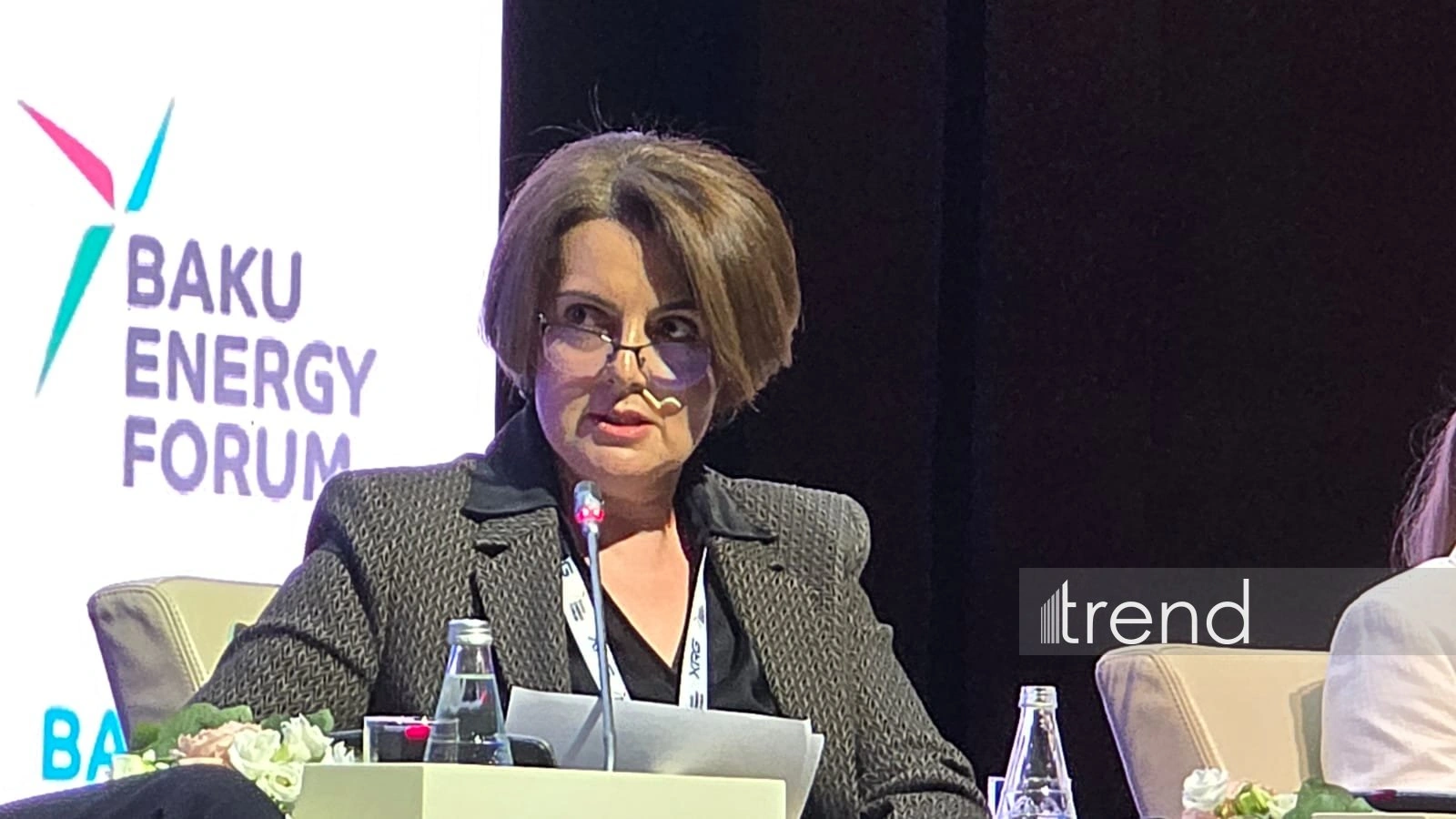
BAKU, Azerbaijan, June 2. Green energy
integration can accelerate the development of low-carbon industries
in the region, Deputy Director of Azerbaijan Renewable Energy
Agency Rena Humbatova said at a panel discussion held on the second
day of the Baku Energy Week, Trend reports.
She shared her views on the prospects for cooperation in the
field of renewable energy between Central Asia, Azerbaijan,
Georgia, and the European Union.
During the panel discussions, Humbatova stressed the importance
of harmonizing policies to form a regional green energy market. She
said that the creation of an integrated renewable energy market
between the countries of Central Asia, Azerbaijan, Georgia, and the
European Union is possible not only through the development of
energy infrastructure, but also through the harmonization of
regulatory frameworks, the introduction of common standards, and
strengthening institutional cooperation.
The deputy director noted that the harmonization of electricity
market rules, joint planning of transmission networks, coordination
of interconnector projects, and the implementation of reliable
renewable energy certification systems are of great importance for
the development of cross-border electricity trade.
Stressing that Azerbaijan has taken important steps in this
direction, Humbatova recalled that in 2023 the Cabinet of Ministers
approved the "Rules for the establishment of a system of
certificates of origin for electricity produced from renewable
energy sources".
"This mechanism ensures the traceability of the origin of
electricity produced from renewable sources from the producer to
the end consumer and allows demonstrating compliance with the
sustainability and carbon accountability requirements of European
markets," she explained.
During her speech, Humbatova also touched on the contributions
that renewable energy integration can make to the development of
low-carbon industries in the region. She said that Azerbaijan has a
fairly high technical potential for renewable energy on land and at
sea, and in order to effectively use this potential, the China
Institute of Electric Power Planning and Engineering is currently
conducting a comprehensive analysis of the country's electricity
transmission network and assessing the possibilities of integrating
renewable energy into the system after 2028.
According to the deputy director, the vast solar and wind
resources of the Caspian region and Central Asia can provide clean
energy to sectors such as metallurgy, chemistry, cement, mining,
and processing industries, reduce carbon emissions, and optimize
production costs in the long term.
Especially in the context of the strengthening of the European
Union's climate policy and carbon regulation mechanisms, access to
electricity from renewable energy sources is of strategic
importance in terms of protecting export potential.
Humbatova also emphasized that regional green energy integration
can accelerate the production of low-carbon fuels such as green
hydrogen, green ammonia, and Sustainable Aviation Fuel (SAF).
"Azerbaijan's rich wind and solar potential, as well as emerging
energy corridors, can strengthen the country's position as both a
production and transit hub.
Renewable energy integration creates significant opportunities
for economic diversification in the South Caucasus and Central
Asia, the creation of value chains for new technologies, the
attraction of foreign investment, and the creation of highly
skilled jobs. This process will also contribute to strengthening
technological cooperation and energy security between the countries
of the region and Europe," she noted.