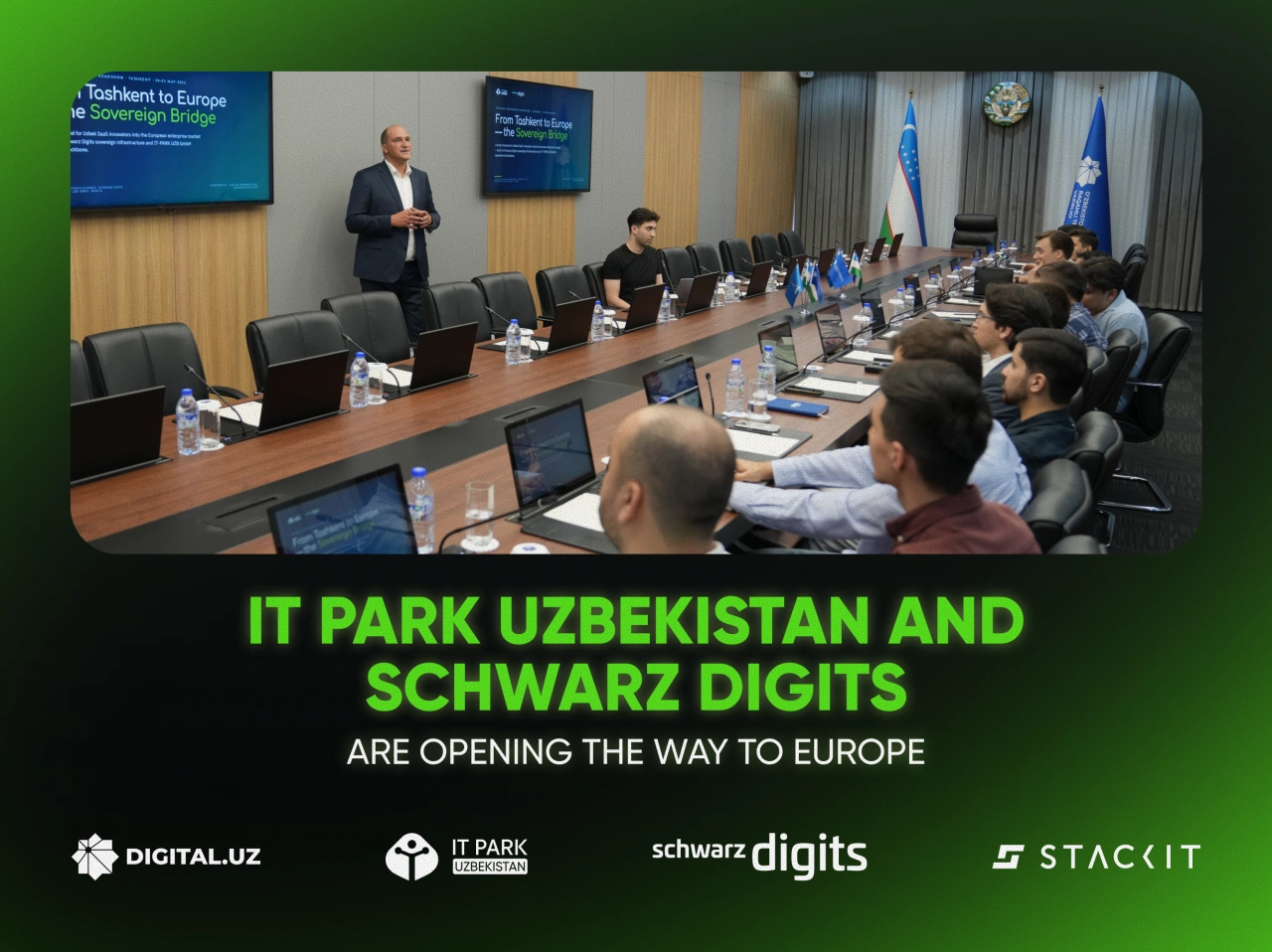
BAKU, Azerbaijan, June 2. IT Park Uzbekistan
brought together representatives of Schwarz Digits, STACKIT, and
local technology companies for talks aimed at strengthening
technological cooperation between Uzbekistan and Europe and
facilitating the entry of Uzbek IT firms into the European
corporate market, Trend reports via IT Park Uzbekistan.
The discussion focused on key requirements for entering the
European market, including data storage and protection standards,
compliance with European security and regulatory frameworks, and
the expectations of large corporate clients. Participants also
highlighted the importance of reliable infrastructure and strong
partner ecosystems within Europe.
Special attention was given to STACKIT, the sovereign cloud
platform developed by Schwarz Digits, and its role in serving
regulated European markets. Company representatives outlined how
European corporate clients assess data sovereignty, infrastructure
reliability, and trust in technology providers, noting that
sovereign cloud solutions are increasingly a core requirement in
the enterprise segment.
The dialogue also addressed practical pathways for scaling into
Europe, readiness of Uzbek IT companies to serve enterprise
clients, and alignment with strict data protection and compliance
requirements.
For Uzbek companies, the meeting provided an opportunity to
engage directly with Schwarz Digits and STACKIT and explore
potential market entry routes through the Schwarz Group
ecosystem.
IT Park Uzbekistan said such initiatives are part of a broader
strategy to expand international partnerships and increase export
opportunities for the country’s IT sector, strengthening
Uzbekistan’s position in the global digital economy.
Schwarz Group, the parent company of Lidl and Kaufland, operates
in more than 30 countries and employs over 500,000 people, making
it one of Europe’s largest corporate conglomerates. Through its
technology arms Schwarz Digits and STACKIT, the group is developing
a sovereign digital infrastructure ecosystem in Europe and views
Uzbekistan as a potential strategic technology partner.