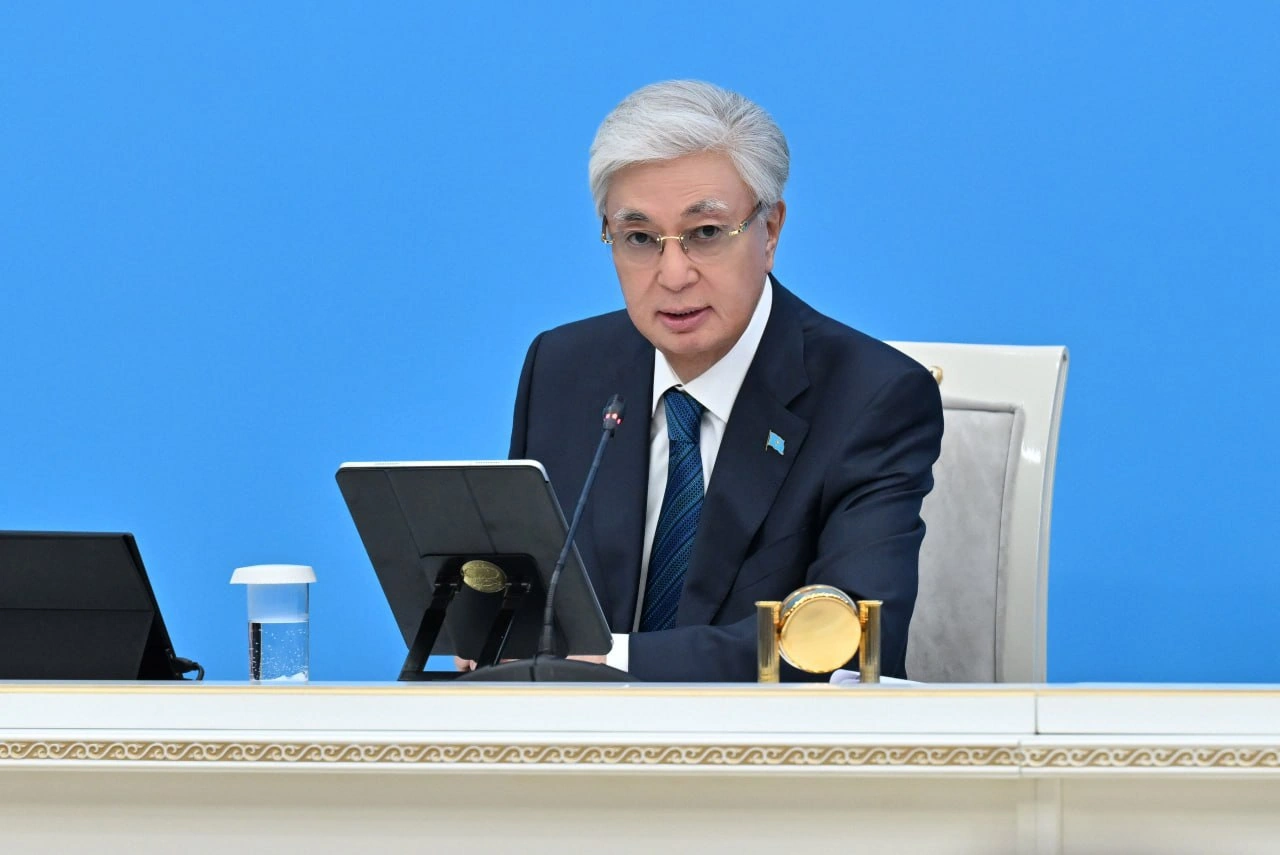
BAKU, Azerbaijan, June 6. President of
Kazakhstan Kassym-Jomart Tokayev has criticized shortcomings in
infrastructure development and governance related to the
implementation of Alatau Smart City, Trend reports via the press service of the
Kazakh president.
Tokayev highlighted a clear discrepancy between the ambitions of
constructing Alatau Smart City and the current socio-economic
conditions in the region, stressing the need to accelerate the
development of basic infrastructure.
He noted that residents of newly incorporated settlements,
including Zhetygen and Koyankus, continue to face persistent
challenges such as unstable internet connectivity, inadequate road
infrastructure, lack of centralized water supply, and frequent
electricity outages.
According to the president, similar issues are observed across
the broader region, citing 919 recorded power outages in 2025 and
201 since the beginning of 2026, largely attributed to aging
electricity networks.
Moreover, he added that engineering and utility works in the new
city districts remain at the design stage, while projects related
to substation reconstruction and expansion of water intake capacity
are experiencing delays.
“This situation reflects a clear gap between the objectives of
developing Alatau Smart City and the actual socio-economic
conditions in the region. We must speak about this openly. I
consider this a failure on the part of the government, in
particular Deputy Prime Minister Qanat Bozumbayev and Akim Marat
Sultangaziev,” Tokayev stated.
He emphasized that the expansion and commissioning of new energy
capacity is a nationwide issue, noting that many experts view the
development of new generation capacity as the primary solution to
energy shortages.
However, he emphasized that discussions often overlook the scale
of current energy losses in the system.
Tokayev also underlined the importance of improving energy
efficiency, referring to the “First Fuel” concept developed by the
International Energy Agency, which prioritizes energy savings as a
cost-effective alternative to new generation. He noted that the
cost of saved energy is 2–3 times lower than the cost of producing
new energy, highlighting significant untapped potential.
Tokayev called for joint efforts by the government, local
administrations, national companies, and civil society to promote
energy-saving awareness, stressing that Alatau City should become a
model of rational and resource-efficient development.