BAKU, Azerbaijan, June 1. The 71st Meeting of
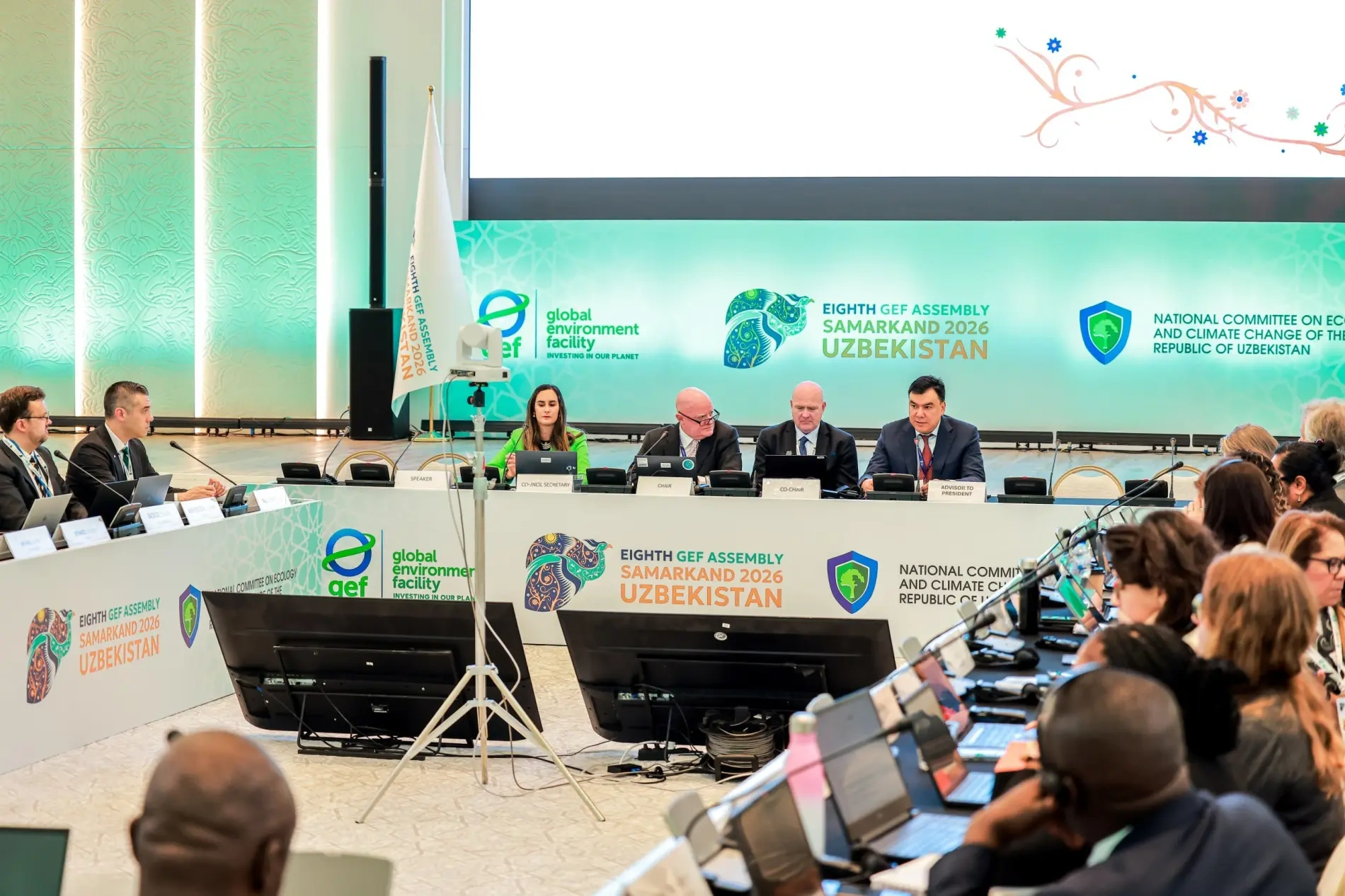
the Global Environment Facility (GEF) Council has opened in
Samarkand, marking the start of a series of high-level
environmental events that will culminate in the Eighth GEF Assembly
and the Eco Expo Central Asia 2026 international exhibition,
Trend reports via the
Uzbek National Committee on Ecology and Climate Change.
The gathering has brought together representatives from 186 GEF
member countries, international organizations, financial
institutions, environmental agencies, civil society groups, and
private-sector stakeholders to discuss global environmental
priorities and climate action.
Over the coming days, GEF governing bodies are expected to
consider the allocation of more than $200 million for environmental
and climate-related projects and review strategic cooperation
priorities for the 2026–2030 period. Discussions at the meetings of
the GEF Council, the Least Developed Countries Fund and Special
Climate Change Fund (LDCF/SCCF) Council, and the Global
Biodiversity Framework Fund (GBFF) Council will focus on
accelerating progress toward international environmental goals
under the UN 2030 Agenda.
The opening session featured remarks from Aziz Abdukhakimov,
Adviser to the President of Uzbekistan on Environmental Issues and
Chairman of the National Committee on Ecology and Climate Change,
and Claude Gascon, Interim CEO and Chairperson of the GEF.
Abdukhakimov described the hosting of the Assembly and related
meetings as a significant milestone for Uzbekistan.
“For centuries, Samarkand connected people, cultures and ideas
across continents. Today, the city once again becomes a meeting
point — this time for global cooperation in addressing our shared
environmental challenges,” he said.
He noted that the Assembly’s theme, “The Last Sprint toward
2030,” reflects the urgency of addressing mounting environmental
challenges as countries work to meet international climate and
sustainability commitments.
Officials highlighted Uzbekistan’s longstanding partnership with
the GEF, which has supported projects focused on biodiversity
conservation, protection of the snow leopard, restoration of
ecosystems in the Aral Sea region, climate resilience, and
sustainable land and waste management.
Uzbekistan currently has a GEF project portfolio comprising 13
projects valued at $56 million, with an additional pipeline of five
projects worth more than $30 million under development.
Council participants are also expected to review initiatives
related to biodiversity protection, sustainable infrastructure,
climate adaptation, renewable energy, energy storage, and
innovative financing mechanisms. Discussions will contribute to the
development of the GEF-9 programming strategy and new support
mechanisms for Least Developed Countries and Small Island
Developing States.
Ahead of the Assembly, the GEF Civil Society Organizations Forum
will also be held in Samarkand, highlighting the role of local
communities and non-governmental organizations in advancing
environmental objectives.
As part of the opening events, an official flag-raising ceremony
for the Republic of Uzbekistan and the Eighth GEF Assembly was held
at the Silk Road Samarkand complex. The ceremony, attended by
Abdukhakimov and Gascon, formally launched one of the world's
largest international environmental gatherings.
Following the ceremony, the GEF Secretariat and Uzbekistan’s
National Committee on Ecology and Climate Change signed a
memorandum of cooperation aimed at strengthening bilateral
collaboration.
The agreement provides opportunities for internships and
professional exchange programs for committee employees within the
GEF Secretariat and expands cooperation in areas including climate
change mitigation, biodiversity conservation, land degradation
prevention, chemicals and waste management, and institutional
capacity building.
The official opening of the Eighth GEF Assembly is scheduled for
June 4 in Samarkand. Officials say hosting the event underscores
Uzbekistan’s growing role in shaping the global environmental
agenda and promoting international cooperation on sustainable
development.