ASTANA, Kazakhstan, May 25. Japan will support
Kazakhstan in responding to the declining water level in the
Caspian Sea, Trend
reports via Kazakhstan’s Ministry of Ecology and Natural
Resources.
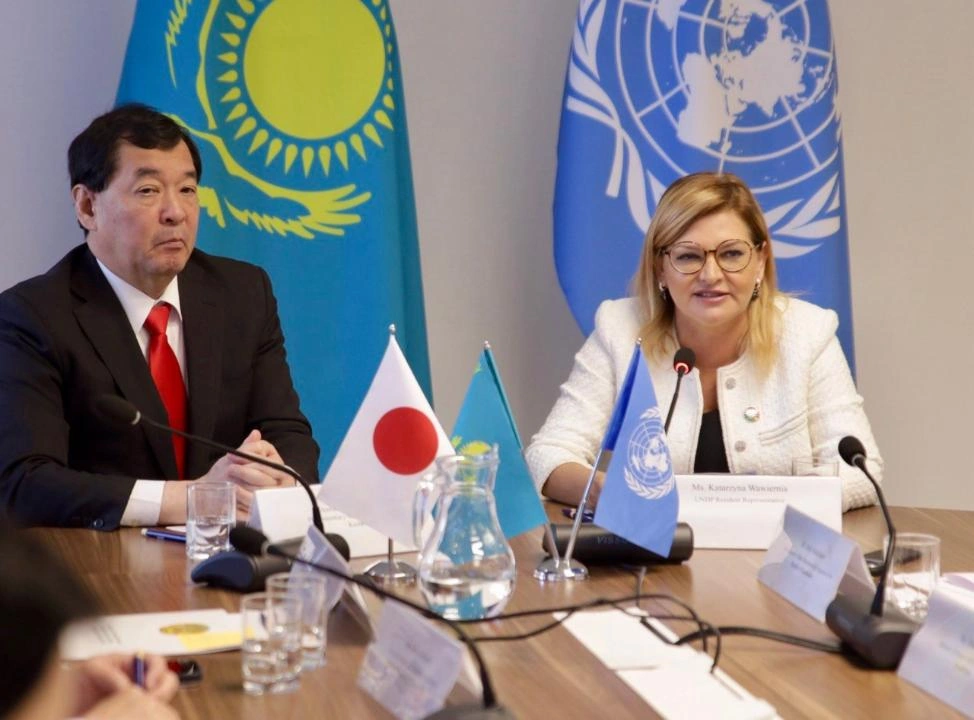
A joint $3 million project is being launched by the United
Nations Development Programme (UNDP) in Kazakhstan and the
Government of Japan.
The initiative will be implemented jointly with Kazakhstan’s
Ministry of Ecology and Natural Resources and the Ministry of Water
Resources and Irrigation.
The project is aimed at improving water resource management and
monitoring, as well as strengthening cooperation between countries.
It also seeks to enhance environmental resilience and support the
development of sustainable water resource management in the
important transport and ecological corridor linking Central Asia
and the Caucasus.
The initiative aligns with the Japanese government’s efforts to
support the Trans-Caspian International Transport Route, announced
during the “Central Asia + Japan” Dialogue and Summit held in
December last year.
“The issue of changes in the Caspian Sea level is currently one
of the most pressing challenges for the entire Caspian region. The
continuing decline in sea level is having a complex impact on
ecosystems, biodiversity, water resources, economic activity, and
the well-being of populations in the Caspian coastal areas,” said
Mansur Oshurbayev, Vice Minister of Ecology and Natural Resources
of Kazakhstan.
According to the ministry, the project will help strengthen
cooperation among Caspian states in water resource management and
joint response measures to declining water levels.
The focus will be placed on environmental data exchange,
coordination of actions, and the development of monitoring systems,
particularly in the vulnerable northern part of the Caspian Sea and
river inflow areas.
Currently, with the support of the Government of Japan, UNDP in
Kazakhstan is implementing three projects aimed at strengthening
the safety of hydraulic structures, increasing urban resilience to
disasters and climate change, and improving emergency preparedness
in Central Asia.
The new initiative will become the fourth joint project within
this partnership and is expected to further strengthen cooperation
in disaster risk reduction and climate resilience.