DUSHANBE, Tajikistan, May 25. On May 25,
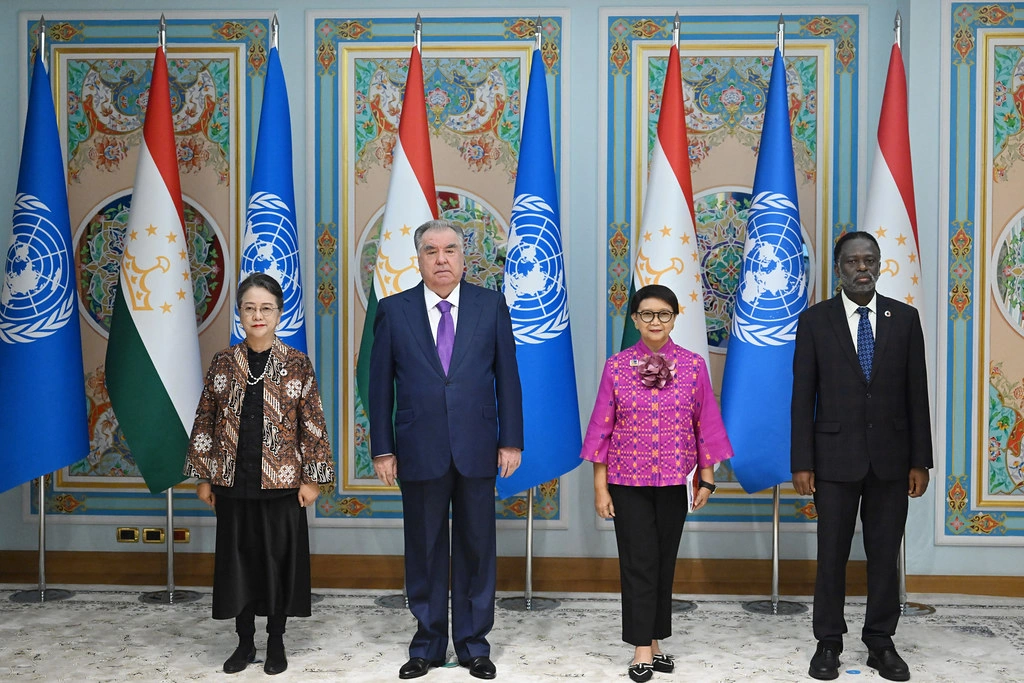
President of Tajikistan Emomali Rahmon held a meeting with a group
of United Nations Deputy Secretaries-General who arrived in
Tajikistan to participate in the 4th High-Level International
Conference on the International Decade for Action “Water for
Sustainable Development, 2018–2028”, Trend reports via the press service of the
Tajik president.
The head of state welcomed United Nations
Under-Secretary-General and Executive Secretary of ESCAP, Armida
Salsiah Alisjahbana, United Nations Under-Secretary-General and the
Secretary-General’s Special Envoy on Water, Retno Marsudi, as well
as Rector of the United Nations University and UN
Under-Secretary-General, Tshilidzi Marwala, and invited them to the
negotiation hall.
At the beginning of the meeting, Emomali Rahmon expressed
gratitude to the high-ranking guests for visiting Tajikistan to
participate in the conference, as well as for their continued
support of the “Dushanbe Water Process”.
During the talks, the parties highly praised cooperation between
the United Nations and Tajikistan, including support for the
country’s global initiatives, particularly in the fields of water
resources and climate, transport and logistics, sustainable energy,
agricultural development, digitalization, and green
technologies.
It was emphasized that 14 UN resolutions have been adopted at
Tajikistan’s initiative in the field of water resources alone.
The parties expressed confidence that the current conference
would serve as an important global platform for consolidating
efforts in this area and promoting water diplomacy, while also
contributing within the framework of the “Dushanbe Water Process”
to addressing key issues related to water resources and
climate.
The sides also held a productive exchange of views on further
advancing the outcomes of previous conferences, ensuring the
successful conduct of the current forum, and preparing for similar
events scheduled for 2026 and 2028.
During discussions on cooperation with the United Nations
University, confidence was expressed that expanding scientific and
practical ties between Tajik scientists, researchers, and experts
and this authoritative institution would yield significant
results.