BAKU, Azerbaijan, May 22. The right to safe and
affordable housing is fundamental to women’s dignity, protection,
and opportunities, and sustainable development and the creation of
sustainable cities are impossible without ensuring these rights,
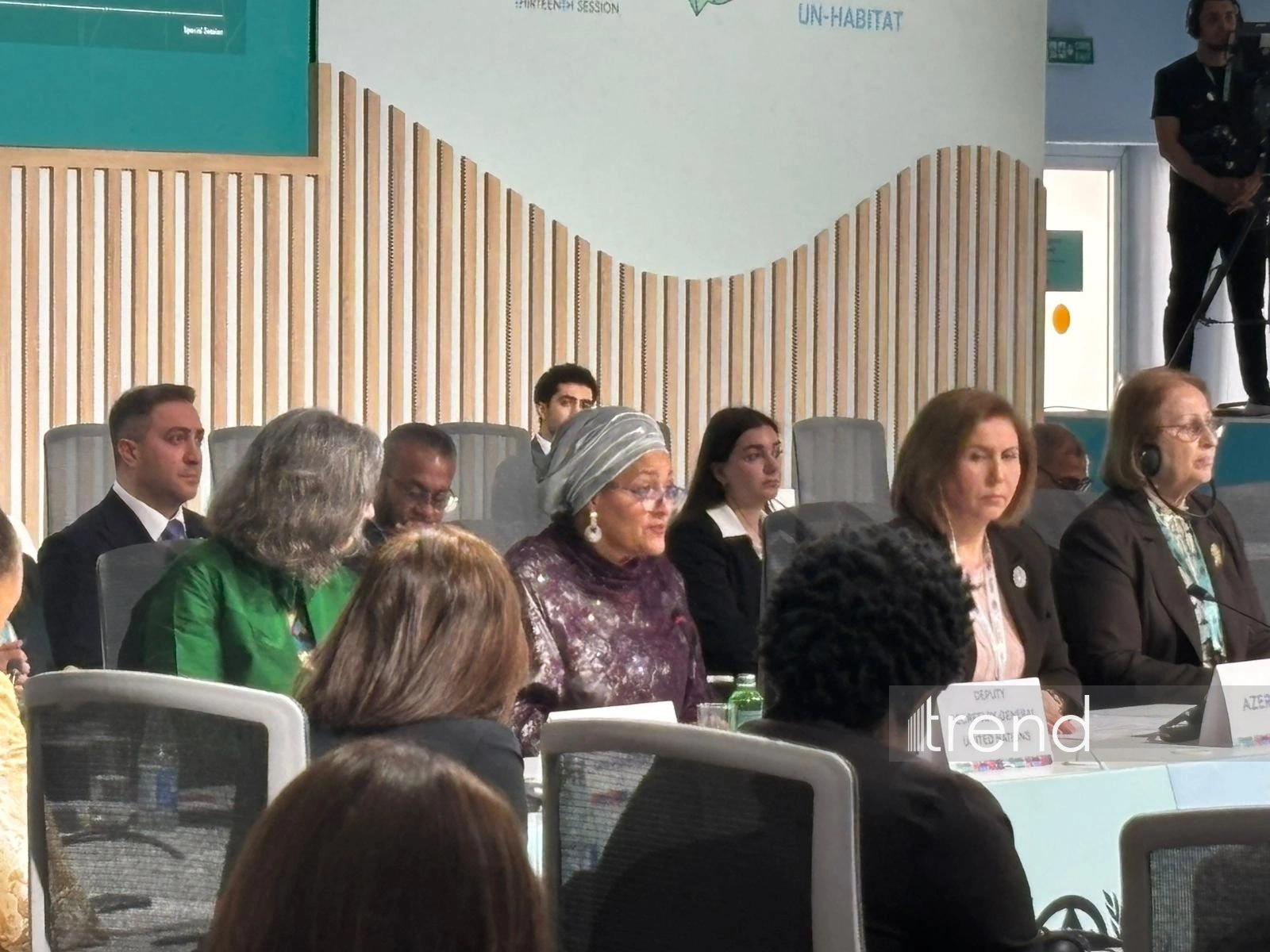
Deputy Secretary-General of the United Nations and Chair of the UN
Sustainable Development Group, Amina Mohammed said, Trend reports.
She made the statement at the “Women’s Roundtable” session held
as part of the 13th World Urban Forum (WUF13) in Baku.
According to her, the housing issue specifically reflects
inequality in societies and directly affects people’s quality of
life.
“For women and girls, home must mean safety, personal space,
stability for children, and the freedom to learn, work, and build a
life on their own terms,” she said.
Amina Mohammed noted that the lack of safe housing makes women’s
lives vulnerable and limits their access to education, healthcare,
and decent work.
She emphasized that the global housing crisis disproportionately
affects women.
According to her, women living in informal settlements, migrant
women, older women, women with disabilities, indigenous women, and
those displaced by conflict face the greatest challenges.
“The lack of security of tenure, limited access to financing and
credit, and housing instability make women more vulnerable to
violence,” the UN Deputy Secretary-General stated.
She also highlighted the issue of psychological stress and
anxiety faced by women in the absence of stable housing.
According to Amina Mohammed, the international community has
already identified the necessary measures within the framework of
the Beijing Declaration, the New Urban Agenda, and the 2030 Agenda,
but the main challenge lies in implementing these commitments.
She highlighted four key areas: developing gender-inclusive
housing policies, closing the gender data gap, reforming housing
financing mechanisms, and ensuring women’s meaningful participation
in decision-making.
Amina Mohammed emphasized that diversity is a strength of
society, and that post-conflict peacebuilding begins with
rebuilding homes and communities.
“There can be no sustainable development or sustainable cities
if women and girls are denied the right to housing,” she said.
Meanwhile, today Baku is hosting the final day of WUF13.
On the first day of the forum, a ministerial meeting on the New
Urban Agenda, a ministerial roundtable, women’s and civil society
assemblies, business sessions, and discussions on urban well-being
took place. The forum also featured a flag-raising ceremony for the
UN and Azerbaijan.
The second day of the forum was marked by the first-ever
Leaders’ Summit. On this day, high-level discussions were held on
the global housing crisis, urbanization policy, and urban
sustainability. Also as part of WUF13, the Mexico City pavilion was
inaugurated, presented as a key platform for expanding cooperation
with the Latin American region and preparing for WUF14.
The third day of WUF13 was also marked by an extensive program
of events. Discussions on this day covered topics such as the
global housing crisis, the creation of safe and inclusive cities,
climate resilience, artificial intelligence and urban governance,
“green” urbanization, social equality, and sustainable
transportation.
One of the highlights of the third day was the signing of a
sister-city agreement between the Azerbaijani city of Shusha and
the Turkish city of Trabzon.
The fourth day of WUF13 featured an extensive program of events
dedicated to the themes of urbanization, climate change, inclusive
urban development, housing policy, and sustainable management.
On the fifth day of the forum, discussions continued on the
global housing crisis, the creation of safe and inclusive cities,
climate resilience, the use of artificial intelligence in urban
management, “green” urbanization, and social equality.
One of the key events of the Cities Forum of the United Nations
Special Program for the Economies of Central Asia (SPECA), held on
the fourth day, was the announcement of Almaty’s official accession
to the “Declaration of Intent on the Establishment of the SPECA
Forum on Smart Cities Resilient to Climate Change.”
Also, for the first time in WUF history, the “WUF13 NGO Forum:
Global Partnership and Decision-Making” was held at the initiative
of Azerbaijan.
The WUF13 Forum, dedicated to the theme “"Housing the world:
Safe and resilient cities and communities", brought together
governments, international organizations, experts, and civil
society representatives to strengthen global cooperation in the
field of sustainable urban development. More than 40,000 people
from 182 countries registered to participate in the forum.