BAKU, Azerbaijan, May 20. Global plastic
pollution could be reduced by 80% by 2040 through the
implementation of existing technologies and a transition to a
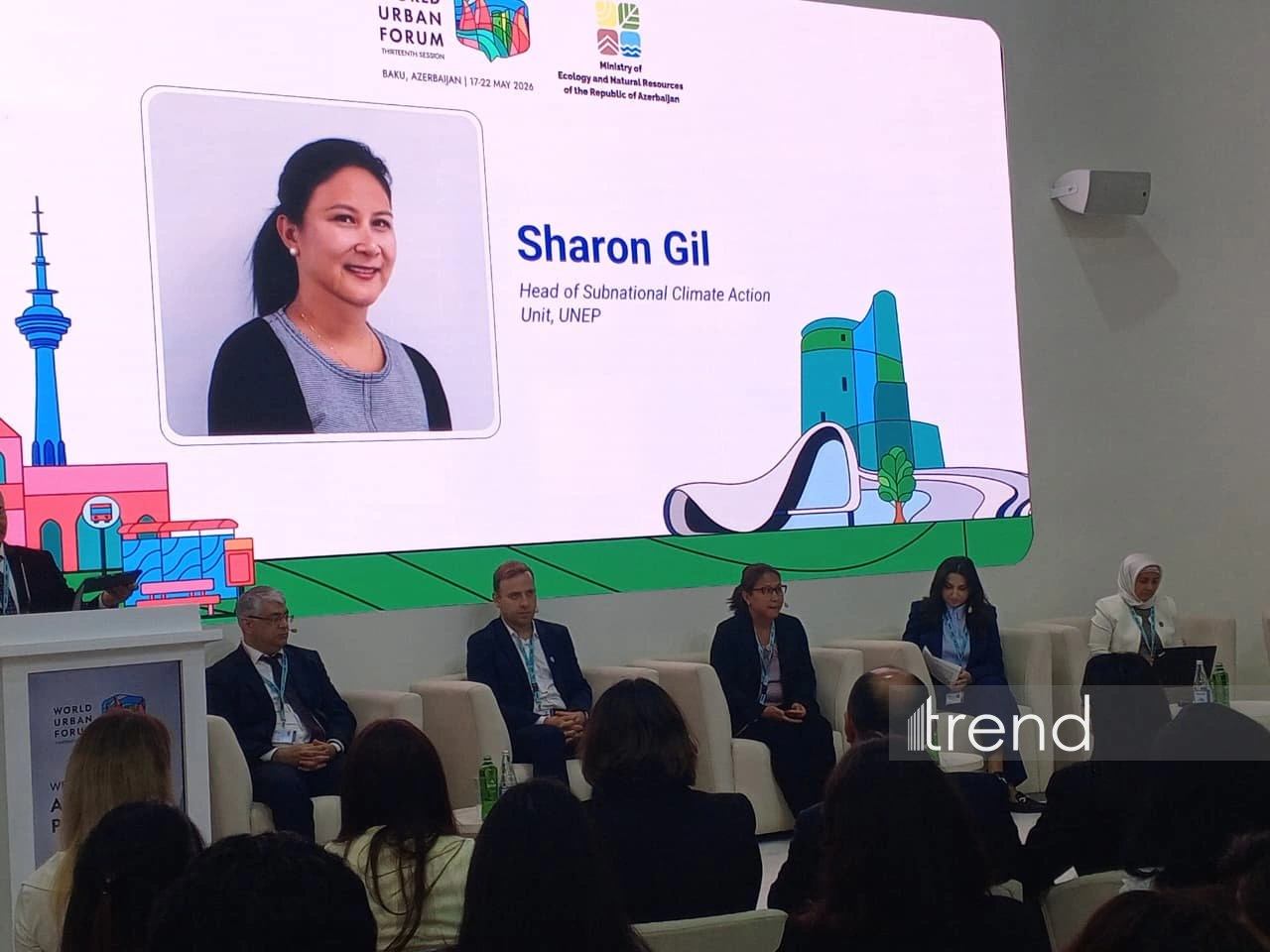
circular economy, Sharon Gil, the Head of the Subnational Climate
Action Unit within the Climate Change Division at the United
Nations Environment Programme (UNEP), said, Trend reports.
She made the statement during the session “Tackling plastic
pollution: promoting liveable cities and a circular economy” held
as part of the World Urban Forum (WUF13) in Baku.
According to her, cities are both the largest sources of plastic
waste and key venues for implementing solutions in this area.
Gill noted that every day, an amount of plastic equivalent to
approximately two thousand garbage trucks ends up in oceans,
rivers, and seas, and the annual volume of plastic waste polluting
ecosystems ranges from 19 to 23 million tons.
Furthermore, Sharon Gil emphasized that the UN Environment
Programme is actively working to create a global database and
monitoring mechanisms for plastic pollution in collaboration with
international organizations, UN agencies, and environmental
partners.
According to the organization’s representative, hundreds of
organizations have already joined the Global Plastics Hub platform,
and the program itself helps countries develop national strategies,
conduct inventories of plastic pollution sources, and implement
measures to foster a circular economy.
Gil announced that the United Nations Environment Programme is
already collaborating with 18 countries on capacity-building
efforts to identify sources of plastic production and develop
national action plans.
She also noted that the transition to a circular economy can not
only reduce pollution but also create about 700,000 new jobs,
primarily in low-income countries.
"Unlike many other global challenges, solutions in this area
already exist. The necessary technologies and alternatives are
available today, and now it is important to move to practical
action," Sharon Gil emphasized.
In her words, one of the key priorities remains working on a
global international agreement to combat plastic pollution, under
which cities should be given greater opportunities to implement
environmental policies at the local level.
Today, the fourth day of the WUF13 conference is taking place in
Baku.
The first day included a ministerial meeting dedicated to the
New Urban Agenda, a ministerial roundtable, assemblies for women
and civil society, business sessions, and discussions on urban
prosperity. An official ceremony marking the raising of the UN and
Azerbaijani flags also took place.
The second day stood out for the inaugural Leaders' Summit,
featuring high-level discussions on the global housing crisis,
urbanization policy, and urban resilience. Concurrently, the
opening of the Mexico City pavilion took place, serving as a
significant platform for expanding cooperation with the Latin
American region and preparing for WUF14.
The third day of WUF13 featured a comprehensive program of
events covering the global housing crisis, the formation of safe
and inclusive cities, climate resilience, artificial intelligence
and urban governance, green urbanization, social equity, and
sustainable transport.
WUF13, which has attracted more than 40,000 registered
participants from 182 countries, will continue until May 22. Held
under the theme “Housing the world: Safe and resilient cities and
communities,” the forum brings together governments, international
organizations, experts, and representatives of civil society to
strengthen global cooperation in the field of sustainable urban
development.